

Table of Contents
Written by
 Mike Waters
Edited by
 Matthew Scott
Why There Are Different Types of Roulette
Roulette has been around for centuries, and like most classic casino games, it hasn’t stayed frozen in one form. The game was created in France in the 1700s, and the name literally means “little wheel.” The basic idea has always been the same: there’s a spinning wheel, the croupier drops the ball, and players bet on where it will land. The concept is really simple, but the devil is in the details.
As roulette spread across Europe and later reached the United States, casinos began adjusting the rules to suit local preferences and, let’s be honest, to tweak the odds in their favour. Small changes to the wheel layout or betting rules here and there, and the house edge has been rising to a point where now it’s over 7.50% in most Las Vegas casinos.
Don’t worry, you can still play much more favourable roulette variants, but my point is that these small tweaks might look insignificant at first, but they have a direct impact on RTP and long-term results.
The 3 Standard Roulette Variants
Today, there are three main roulette types that every player should know: European Roulette, American Roulette, and French Roulette. They all look almost identical (especially French and Roulette), but the differences between them are big enough to change the maths behind the game.
Before getting into modern online variants and creative versions, I’ll start with these three ‘classic’ or ‘standard’ games:
European Roulette
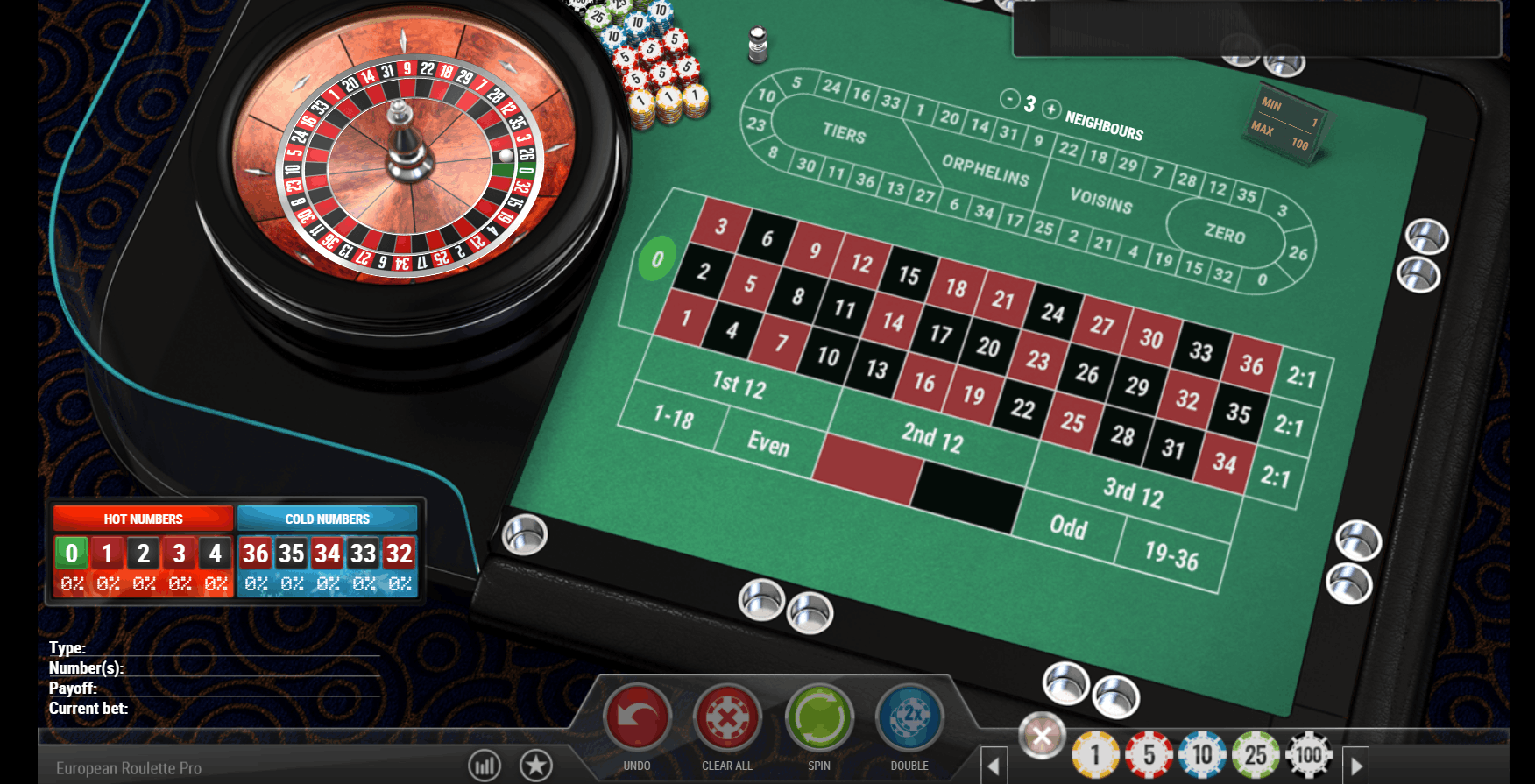
The most popular of the three ‘classic’ roulette variants is the European roulette version. The popularity behind it is mainly due to its favourable odds and a low house edge of just 2.70%, which is noticeably lower than American roulette. That’s because the wheel here has just one 0, so the total number of pockets is 37.
There are 36 numbers from 1 to 36, and the 0, which increases your chances of winning. Say, you want to play an outside bet like Red/Black, you’ve got almost a 50% chance of winning. The more zeroes a roulette wheel has, the higher the house edge, so the European wheel is the best one you’ll get because it has just one zero.
Another thing I like about European roulette is that it keeps things as simple as it gets. The betting layout is clean, and the rules are straightforward; most online roulette games actually follow this format. You’ll find all the standard roulette bets here, from single-number bets that pay 35:1 to outside bets like Red/Black, Odd/Even, or High/Low that pay 1:1. Naturally, the payouts depend on the type of bet you choose.
The betting range itself depends entirely on the specific game or casino table. Some European roulette tables start from very small bets, but don’t have high maximum bet limits either, while others are better suited for high rollers. Personally, when I’m choosing a roulette game, I always look for a table with a wide betting range because it gives me flexibility to use a progressive betting strategy, which works best with European roulette.
Of all the different variants, European roulette is the safest “default” option for most players. It has a good RTP of 97.30%, simple rules, and no extra complications, and that’s exactly why it became the standard version you’ll see at most online casinos today.
Note from Australian Gamblers: You’ll easily find European roulette tables at online casinos, but, unfortunately, it’s slowly disappearing from land-based casinos. On my last trip to Vegas, most European tables were limited to the very high-roller areas, and you’ll see a similar pattern at many Australian land-based casinos, too. This is another ‘proof’ that this variant gives you the best value.
American Roulette
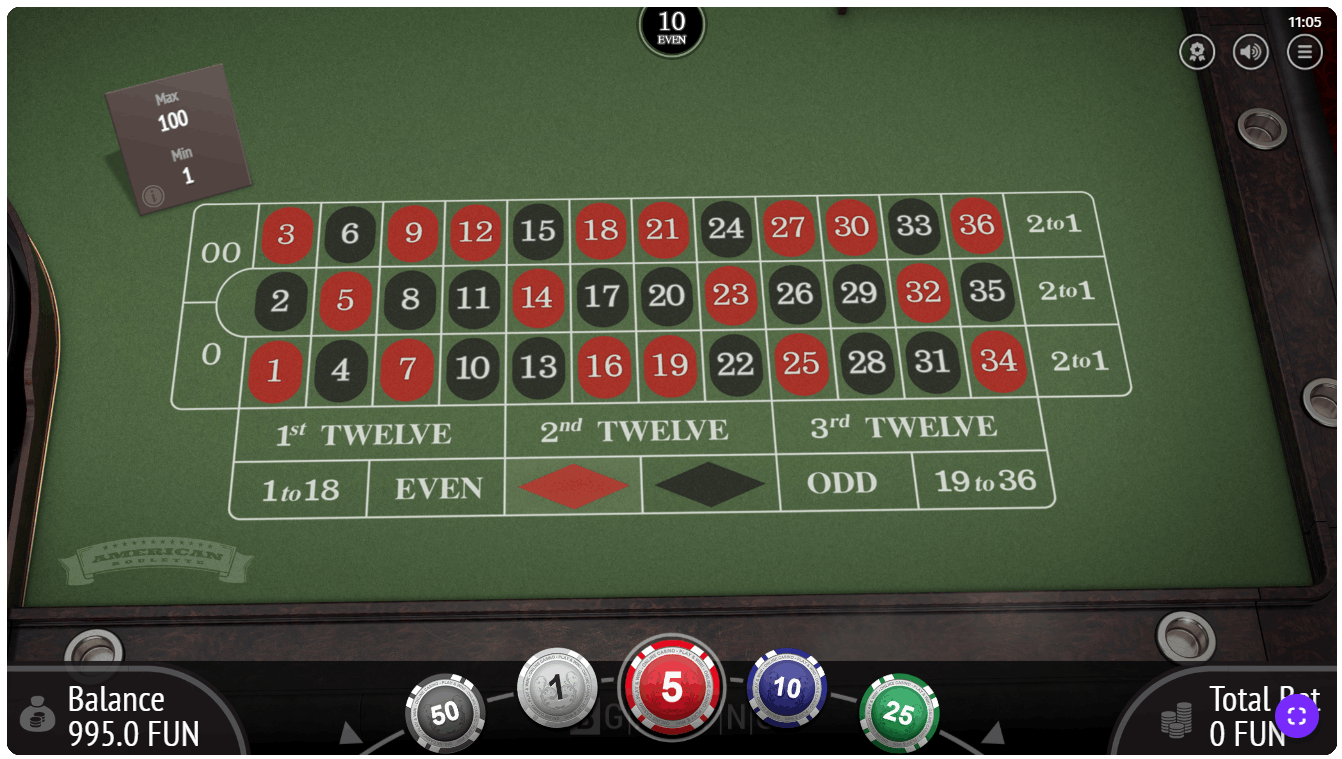
American roulette is the other ‘classic’ variant and looks almost identical to the European version, but there’s one small change that makes a big difference to the maths. The wheel has two zeroes instead of one: a single 0 and a double 00. That means there are 38 pockets instead of 37, and that extra pocket pushes the house edge up to 5.26%, which is almost double compared to European roulette.
From a gameplay POV, nothing else really changes. The betting layout is almost the same, the payouts are the same, and the gameplay is identical. The problem is that your long-term odds are simply worse, and you’re giving the casino more edge without getting anything extra in return.
This is why I personally try to avoid American roulette whenever I can. If there’s a European or French table available, I’ll pick it every time before the American variant. The only situation where I’d even consider playing American roulette is when the alternative is an even worse variant with extra rules or zeroes (looking at you, Triple Zero Roulette) that reduce the RTP even further.
French Roulette
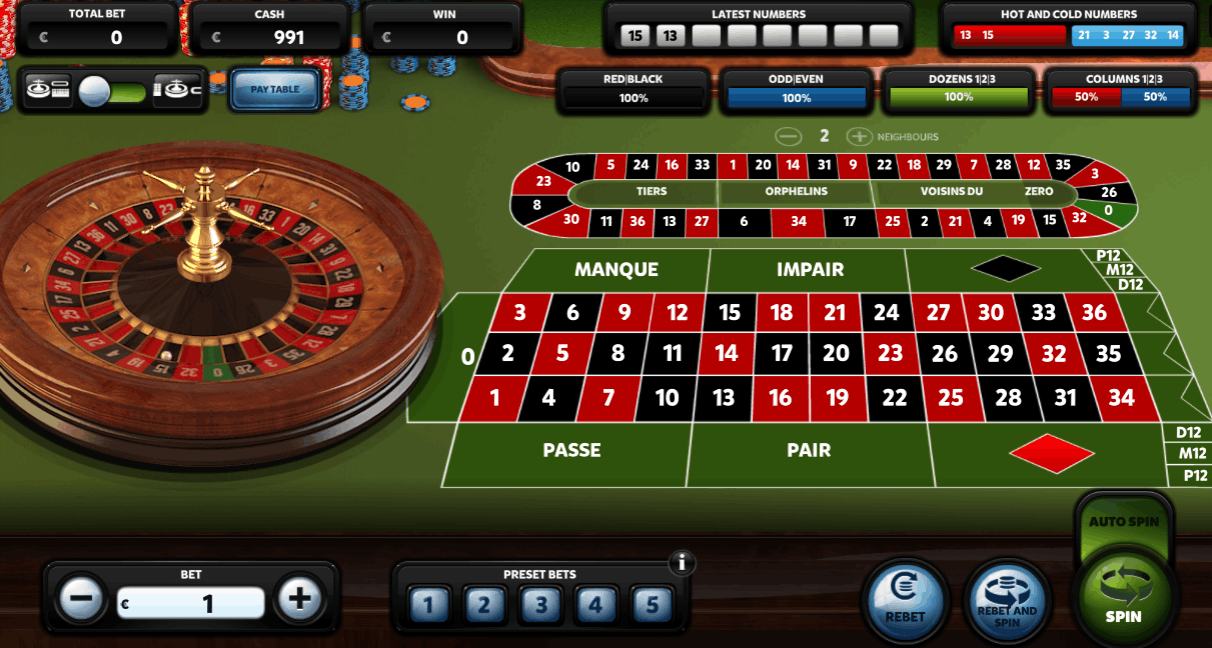
French roulette is the third member of the classic roulette trio, and in my opinion, it’s the best version of the game when you find a real French roulette table. The problem is that it’s becoming a bit of a dying breed. Real French roulette tables are harder and harder to find, both online and especially in land-based casinos, because most operators simply replace them with European or American roulette.
The wheel that French roulette uses is similar to the European one, which still has a single zero, so the base house edge is the same 2.70%. The difference comes from two special rules that exist only in true French roulette: La Partage and En Prison.
- La Partage applies to even-money bets like Red/Black, Odd/Even, or High/Low. If the ball lands on zero, instead of losing your entire bet, you only lose half of it. This small rule cuts the house edge on those bets down to about 1.35%, which is one of the best odds you’ll find in any casino game.
- En Prison works in a similar way but feels slightly different in practice. If you have an even-money bet and the ball lands on zero, your bet is “imprisoned” for the next spin instead of losing immediately. If your bet wins on the following spin, you get your money back. If it loses, then the bet is gone. Mathematically, the effect is the same as the La Partage (RTP of 98.65% and house edge of just 1.35%), and both rules are extremely player-friendly.
Unfortunately, many games labelled “French Roulette” today are essentially European roulette with a French-looking betting layout. The table might say Rouge, Noir, Pair, or Impair, but the La Partage or En Prison rules are missing, so there’s no point choosing it over European roulette.
My advice is: if you see a French roulette game, don’t assume it’s automatically better. Check the rules first, and if La Partage or En Prison are included (you can only have one of them, you can’t have both at the same time), then it’s a real French roulette table, and it’s worth playing it over European roulette. If not, you’re basically just playing European roulette.
Other Popular Types of Roulette Games
The three classic roulette types have served as the base for many other roulette variants. And, truth be told, things get a lot more creative when you move away from them.
Software development studios have been experimenting with different roulette versions for decades now, and you’ll now find roulette with multipliers, bonus games, jackpots, multiple balls, multiple roulette wheels, and many other elements that you don’t normally find in roulette.
I genuinely like some of these variants, but some of them are just plain bad, and you should avoid them altogether. Below, I’ve listed some of the most popular modern roulette variations and compared them to standard versions like European or French.

Lightning Roulette was the first big “modern” roulette hit, and looking at it from this perspective, it opened the door for all multiplier-style roulette games that came after it. The concept is simple: before each spin, random numbers get assigned multipliers, sometimes going up to 500x or more. If the ball lands on one of those numbers, you get the boosted payout.
It sounds amazing, and yes, the big wins look impressive, but there’s a trade-off. In most multiplier roulette games (like Lightning Roulette by Evolution, Quantum Roulette by Playtech, and Mega Roulette by Pragmatic Play Live), the multipliers only apply to straight-up bets.
Now, the catch: 35:1 payout on straight-up numbers is reduced to fund the multipliers, which lowers the RTP compared to classic roulette. So, you’ll often see payouts of 29:1, 25:1, or even 19:1 for straight-up bets. In other words, the volatility is much higher, and you’re risking more for a bigger payout potential.
The thing is that the multipliers almost never cover the ‘adjusted’ (read lower payouts) for straight-up bets, so you end up playing a game with a much worse RTP – often even below 90%. My suggestion is to read the rules very carefully and focus on the section that explains the payouts.

This is one of the most popular ‘non-standard’ variants, and you’ll find it in both RNG and live dealer formats. It’s actually a standard roulette game with a shorter betting time and rounds, so it’s not some innovative variation with bonuses or anything like that.
It’s usually played with a European roulette wheel, so the rules are fairly standard, but instead of 25-30 seconds to place bets, you get 10-15 seconds. Personally, I’m not a big fan of speed roulette because I often use a roulette betting strategy like Oscar’s Grind, which does require more betting time.
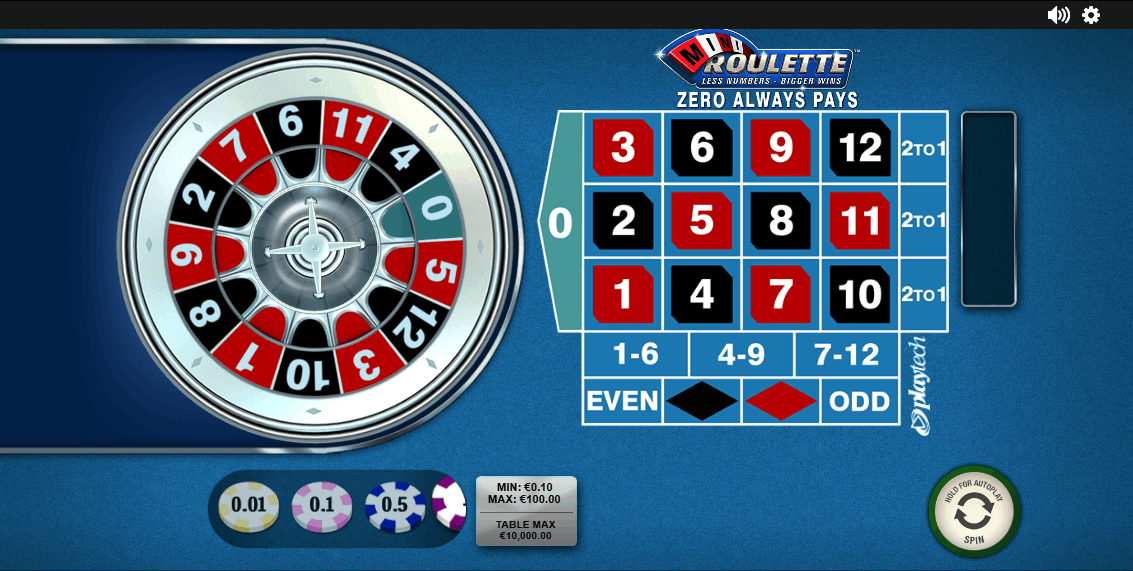
Mini Roulette is exactly what it sounds like: a smaller, simplified version of the classic game. Instead of the usual 37 or 38 pockets, the wheel has only 13 numbers, typically 1 to 12 plus a single zero. The fewer pockets would make you think that you get better odds of winning, but actually, they’re much worse.
The payouts are adjusted to match the smaller wheel, and the house edge is actually much worse than standard European roulette in most versions. In many cases, Mini Roulette has a house edge of around 7.69%, which is almost three times that of European roulette.
Personally, Mini Roulette is not a variant I would seriously consider, but you can try it in demo for free and see if you like it.
Unfortunately, Triple Zero Roulette is becoming increasingly common, especially in Las Vegas land-based casinos. If you’ve visited recently, you’ve probably noticed that many tables that are available to casual tourists now use a wheel with three zeroes: 0, 00, and 000.
From a casino perspective, it’s obvious why this version exists. Adding a third zero pushes the house edge up to around 7.69%, which is much higher than European roulette’s 2.70%. And the worst part about it is that the game looks almost identical to European or American roulette, so many players don’t even realise that they’re playing a much worse version.
I’ll be honest here: I have never played Triple Zero Roulette for real money, and I don’t intend to. The maths is simply stacked too heavily against you, and there’s no real upside compared to (almost) any other roulette variant. If you see a triple-zero wheel and there’s any other option available, pick the other option.
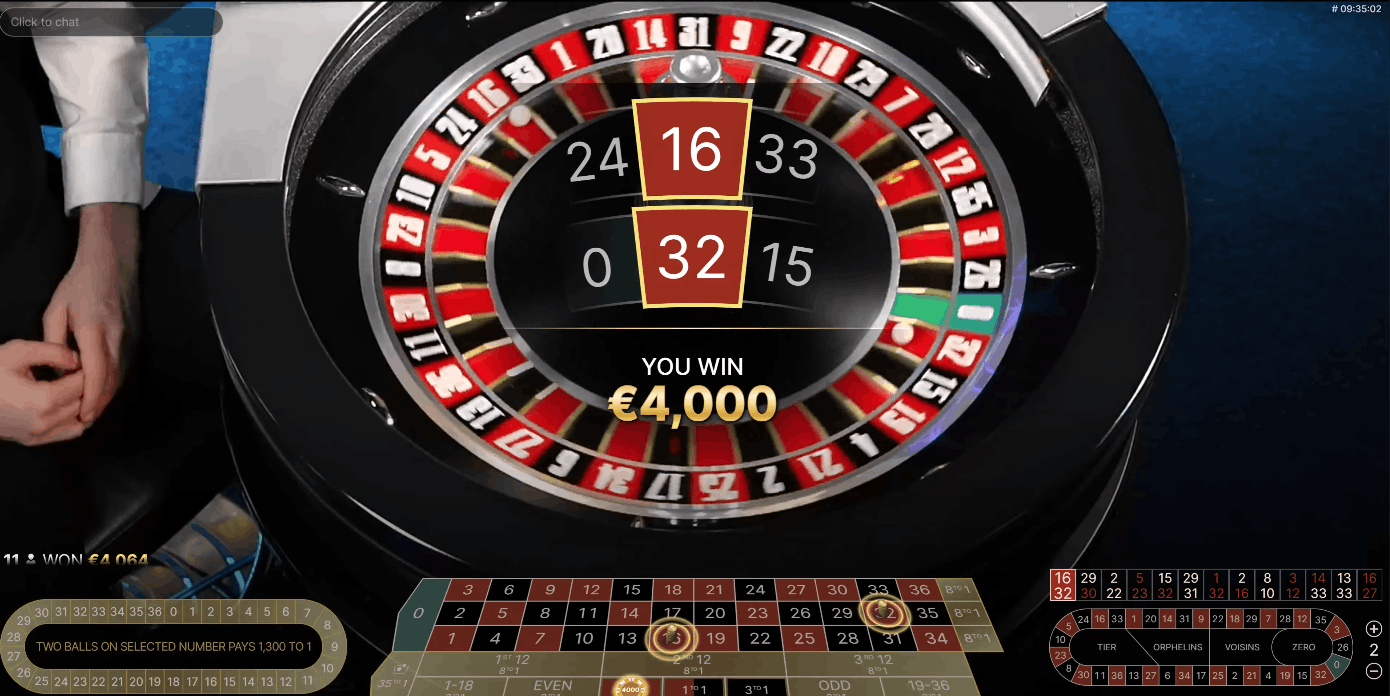
Now this is an innovative and fun roulette variant! As the name suggests, this is a roulette game where there are two balls in play. I first saw it in a casino more than two decades ago, but now it’s usually played as an online live casino game with a host instead of a croupier, so the balls are released by an automated airgun almost simultaneously.
It uses the standard European roulette wheel, with most bets being standard, but the odds are quite different. For example, a straight-up bet pays only 17:1 instead of 35:1 because you get double the chances to win.
Outside bets like Red/Black, however, pay 3:1 instead of 1:1 because they require both balls to land on your pick, so this is far from a standard roulette game. There’s also a jackpot bet where both balls are required to land on the same number, and the payout is 1,300:1, but obviously, this is an incredibly hard bet to win.
Double-ball roulette is my go-to ‘special’ variant when I want to play something different from the standard games. I like it because it’s truly unique, it introduces special features that you won’t find in any other variant, and the RTP is still around 97.30% – same as European roulette.

Games like Red Door Roulette by Evolution have been a popular trend in recent years. They’re a combination of popular game shows (like Pragmatic Play’s Money Time) with roulette. In Red Door Roulette, for example, the base game is a standard European roulette, but there’s a bonus trigger if the ball lands on a certain number (and you’ve placed a bet on that number).
When the bonus activates, you’re taken to a mini game (the host literally goes into a different room for the bonus game), where you need to pick doors, and behind them, there can be multipliers, cash prizes, and different perks depending on the particular game.
The idea sure is fun, and if you’re into game shows, I can definitely recommend these variants. Each one is different, so read the rules before you play it. The RTP is generally a bit lower than the standard game, but the difference is so small that it’s barely noticeable. Sometimes, like in the case of Mega Roulette 3000 by Pragmatic Play Live, the RTP is even slightly higher (97.50% in this case), so I wouldn’t discard these roulette + game show hybrids that easily.
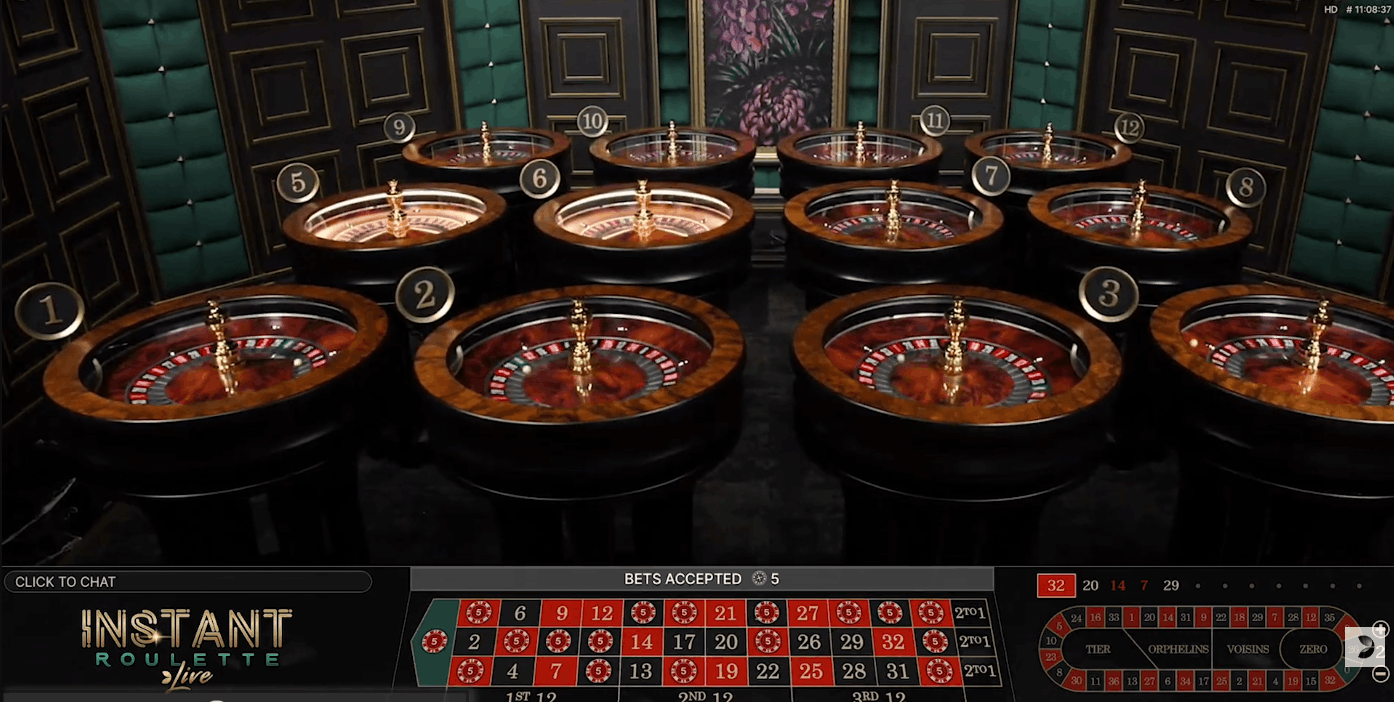
There are different types of roulette with multiple wheels, and each has its own rules, so my advice is to keep your eyes open and read the rules before playing. For example, in Microgaming’s (now Games Global) Multi-Wheel Roulette Gold, you can play at up to 8 wheels at once, so if you were to wager, say, A$10 on Red, you can place 8 similar bets and once for a total of A$80, and you’ll be paid out based on the results of each wheel.
When studios release a ‘multi-wheel roulette’ version, the goal is usually to speed up the game, so it’s up to you to decide whether you prefer the faster pace or not. The only multi-wheel roulette game I would seriously consider is Evolution’s Instant Roulette, which is played with 12 wheels that spin simultaneously, but you still place just one wager. Your wager is automatically placed on the wheel that’s about to finish its spin next, and there’s no betting time limit.
RNG vs Live Casino Roulette
Roulette can be played in two main formats online: RNG-based and live casino. The terms, rules, and RTP can be identical, but the experience is very different.
RNG Roulette
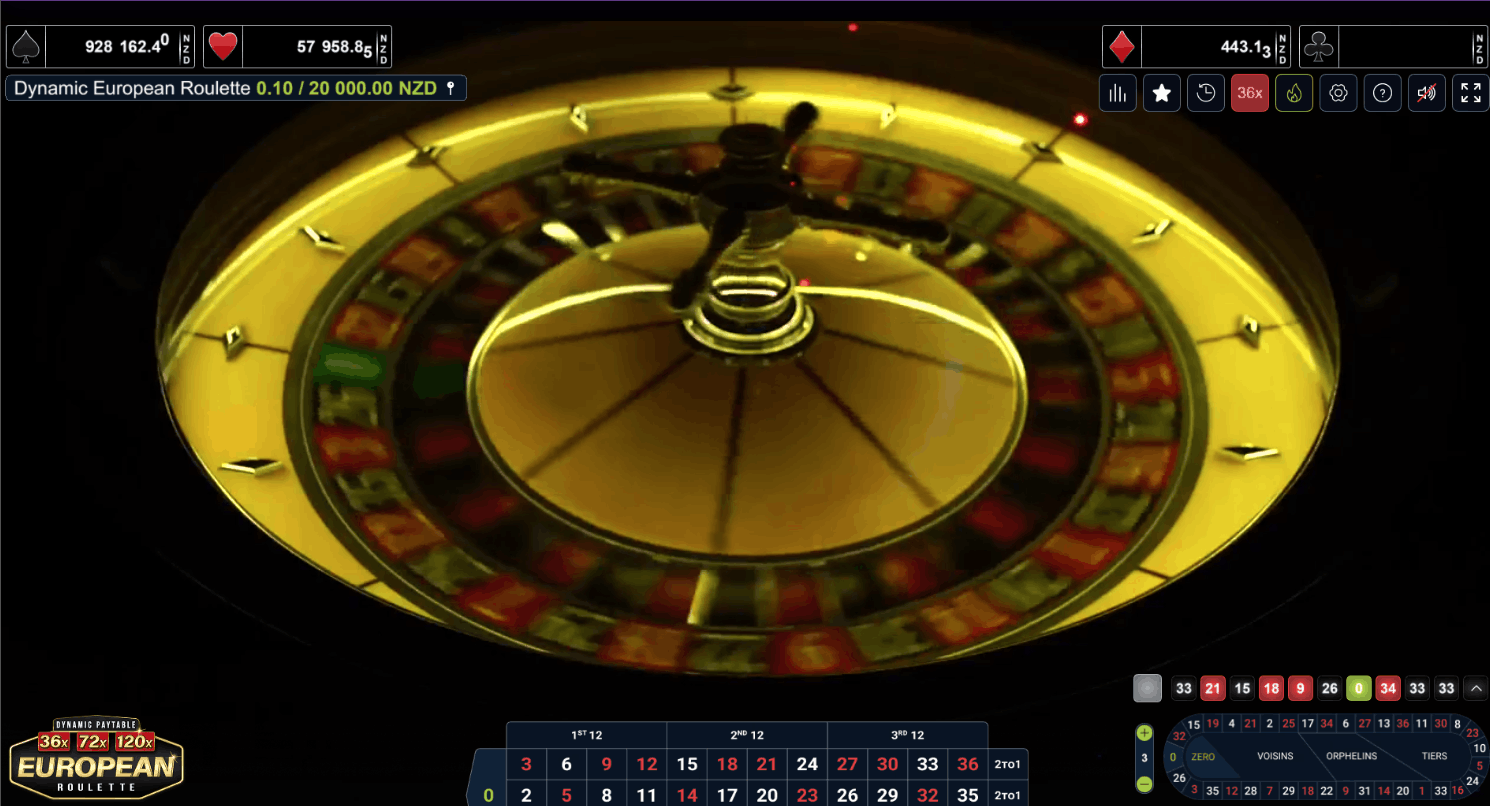
RNG roulette is a digital game that uses a digital wheel and a random number generator (RNG) to determine the outcome of the spins. Everything is software-based, including the ball drop, animations, and results. Since you’re playing alone, you control the pace of the game, and many games even have the autoplay option, where you can set, say, 50 rounds with the same bet.
I’d say that RNG roulette is more practical, and many RNG games are also available in demo mode, which is helpful if you want to test a betting system without risking real money.
Live Casino Roulette
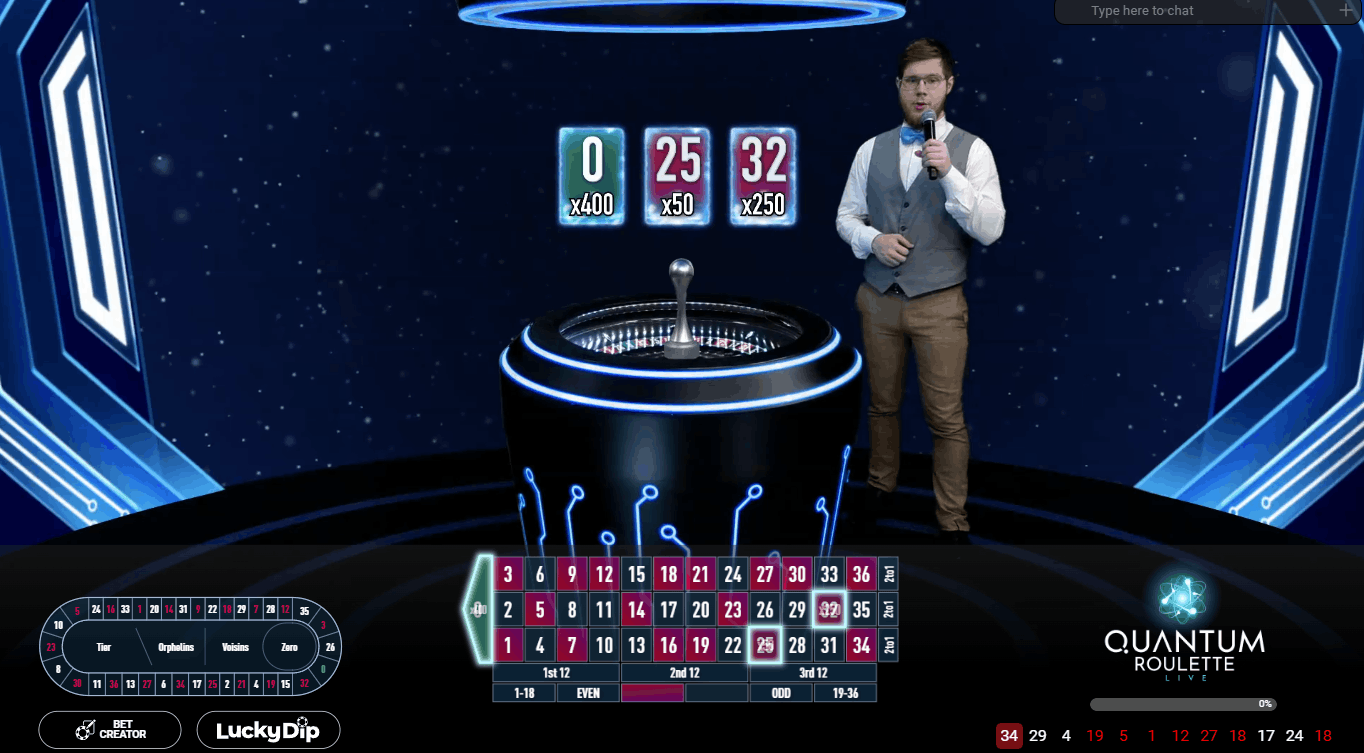
The other option is live casino roulette. It’s a live game that’s streamed from a studio or casino floor with a real dealer spinning a real wheel. The pace is controlled by the game, and you usually get a fixed betting window (around 25 seconds) because you’re playing alongside other players. If you’re after the most realistic online roulette variant, this is the one.
From a pure value perspective, I don’t automatically prefer one over the other. What matters to me is the wheel and the rules. If it’s European rules with a single zero, I’m happy whether it’s RNG or live. If it’s double zero or triple zero, they both suck.
The same goes for non-standard roulette types. There are double-ball and multi-wheel roulettes in both RNG and live dealer variants, although the focus in recent years has been on live casino games.
Check out the main differences in the table below:
| Feature | Online (RNG) Roulette | Live Casino Roulette |
|---|---|---|
| Accessibility | Available 24/7 | Some tables may have schedules or limited seats |
| Interaction | You play alone vs software | You can interact with the dealer and other players at the table |
| Pace | You control the pace, no waiting | Fixed betting window and natural table pace |
| Variety | Huge range of variants and formats | Great coverage of standard and innovative variants and formats |
| Atmosphere | Fully digital experience | Played on a real roulette wheel and streamed live from a studio or casino |
| Strategy Testing | Great for testing strategies, available in demo | No demo, limited betting time |
| Bet Limits | Usually lower minimum bets | Often higher minimums and maximums |
| Transparency | Certified RNG tested by independent labs | Real physical wheel, outcomes visible in real time |
Tip from Mike Waters: One practical difference I’d like to mention is bet limits. RNG roulette often has lower minimum bets, which makes it more flexible if you’re experimenting with progressive systems. Live tables, especially the premium ones, can have higher minimums, but also higher maximums, which makes them better suited for high rollers.
Roulette Rules that Affect the RTP
Unlike blackjack, the rules in roulette are generally fixed, and there aren’t any major changes. If there’s one thing to remember is that names like “Premium Roulette”, “VIP Roulette”, “Grand Roulette” usually mean nothing, and they’re used as marketing tricks. The only thing that matters is the wheel and the payout structure.
Here’s what you need to check in every roulette game:
- Number of Zeros: This is the most important factor in roulette. A single-zero wheel (European or French) has a house edge of 2.70%. A double-zero wheel (American) jumps to 5.26%. The more zeroes, the worse your odds are, and nothing else in roulette affects RTP more than this.
- Betting Limits: Simply put, the wider the limits, the better. If you’re using a progressive betting strategy, the maximum payout per round and the maximum betting limit are two very important factors to consider because they might limit your strategy in the long run.
- Straight-Up Payout: In standard roulette, a single-number bet pays 35:1. In multiplier versions, that payout is often reduced to fund the bonus features. You’ll sometimes see 29:1, 25:1, or even lower. That adjustment lowers the RTP, so pick games with higher payout ratios.
- Wheel Type in “Special” Variants: Speed roulette, multi-wheel roulette, or other modern versions often still use a standard European wheel, which is fine. But some branded or casino-exclusive tables sometimes use American or even Triple Zero wheels, which will lower your odds of winning.
- Bonus or Jackpot Bets: Some modern roulette games add optional side bets or jackpot features. These almost always come with a higher house edge than the base game, which means that, in the long run, they’re worse than standard roulette.
- La Partage and En Prison: If you find a proper French roulette game, check out if one of these rules is available. If En Prison or La Partage is active, the house edge on even-money bets drops to 1.35%.
Final Thoughts: Which Roulette Game Should You Actually Play?
After years of playing roulette in both land-based and online casinos, I’ve come to a very simple conclusion: there isn’t a “best” roulette game – there’s only a best wheel.
If you want the highest RTP, your priority should always be a single-zero wheel. European roulette is widely available (at least in Australian online casinos), so you should look for European variants. Real French roulette with La Partage or En Prison is even better if you play even-money bets, but it’s much harder to find, which makes it a less viable option.
American roulette is already a significant downgrade because of the extra zero, and triple-zero is even worse. Multiplier and bonus versions can be a good pick in the short term, but most of them reduce payouts to fund those features, which means the long-term RTP is worse than the good-old standard European roulette.


Disclaimer: Gambling in Australia is strictly for individuals aged 18+. Our editorial team adheres to a strict policy to ensure that our reviews, recommendations, and content remain objective and free from external influence. We strongly encourage responsible gambling at all times. If you or someone you know is struggling with gambling addiction, visit the following gambling resources:
- https://responsiblewagering.com.au/
- https://www.gamblinghelponline.org.au/
- https://gamblershelp.com.au/get-help/