



Transparency is one of the things I value the most when testing online casinos and games, and the provably fair technology is essentially a transparent way to check if the results of the round weren’t manipulated, be it a Plinko game, a dice game, a roulette game, Mines, Crash, or any other type of casino game.
What Are Provably Fair Games?
Provably fair games are casino games built with cryptographic tools that let players verify the outcome of each round. The casino and the player each contribute a random seed, and the game uses both to create the result.
The important part is that the casino can’t change its seed after the fact, so it can’t change the outcome of the game in the middle of a round. Once the round ends, the game reveals the data it used, and you can check whether everything was fair.
Make no mistake – provably fair games still have a built-in house edge. If the game’s RTP is, say, 97%, it means that the game still has a built-in house edge of 3%. In other words, just because you can check the outcome, it doesn’t mean that the game is more predictable. It just means that you don’t have to guess whether it was fair or not, because you can check the result yourself.
The provably fair technology was developed and became a big deal in crypto casinos because transparency was seen as a weakness in crypto technology.
Traditional online casinos could rely on regulators, testing agencies, and familiar software providers to reassure players that the games are fair, but crypto casinos didn’t have that luxury. So, as a way to prove that a crash round, a dice game, or a roulette spin wasn’t rigged, they invented this cryptographic verification that we now know as provably fair.
The first provably fair games were extremely simple dice and basic number games because they made the maths easier to verify. As more crypto casinos began adopting the tech, developers began applying it to many of their crash, mines, keno, and other instant-win games. Today, you can often find games that are provably fair, be it crypto-only or hybrids.
This is especially true for instant-win games like Mines by Hacksaw, for example, where you can check the result of every round.
Note for Australian Players: If you’ve been around crypto casinos for a while, you might remember when most sites had a dedicated “Provably Fair” section in the main menu. Back then, it was still a selling point, but these days, you won’t see that as often, not because the feature disappeared, but because most modern instant-win and crash games are already expected to be provably fair.
How the Provably Fair Technology Works
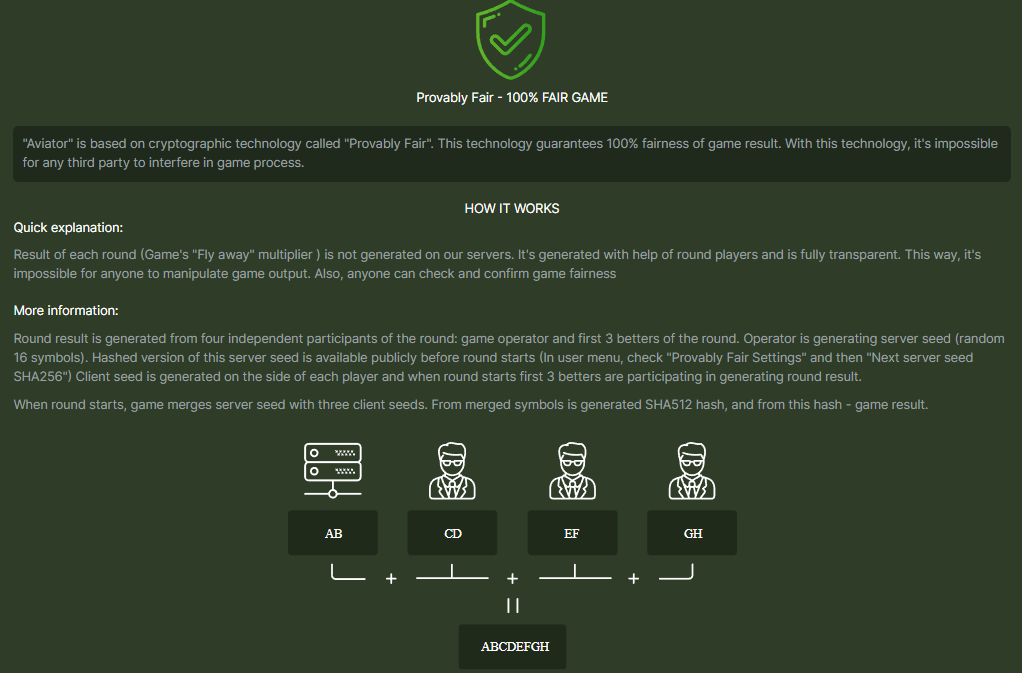
The way that provably fair games work is that both the casino and the player contribute random data (called seeds) that determine the final result of the round.
The casino provides a server seed that’s initially hidden by hashing, and the player provides a client seed. Once the round finishes, the casino reveals its server seed, and you can verify that the hashed version you saw before the round matches the revealed one. If it matches, you know they didn’t change it mid-round or “rig” it.
The game also uses a nonce, which is just a round counter, so that the same pair of seeds can generate multiple results without repeating. This means that the outcome is unpredictable ahead of time (because neither you nor the casino knows the server seed), but you can verify it afterwards.
In simple words, the casino can’t change or temper the outcome of the game without leaving evidence, and players can check whether the results have indeed been fair.
Note from Australian Gamblers: The words seed and nonce come from blockchain and crypto terminology, where they’re used to describe pieces of random data. A seed is just a starting point that tells the game’s algorithm how to generate a number or result. A nonce is simply a counter that changes every round, so the same seeds can’t provide the same outcome.
How to Verify a Provably Fair Game
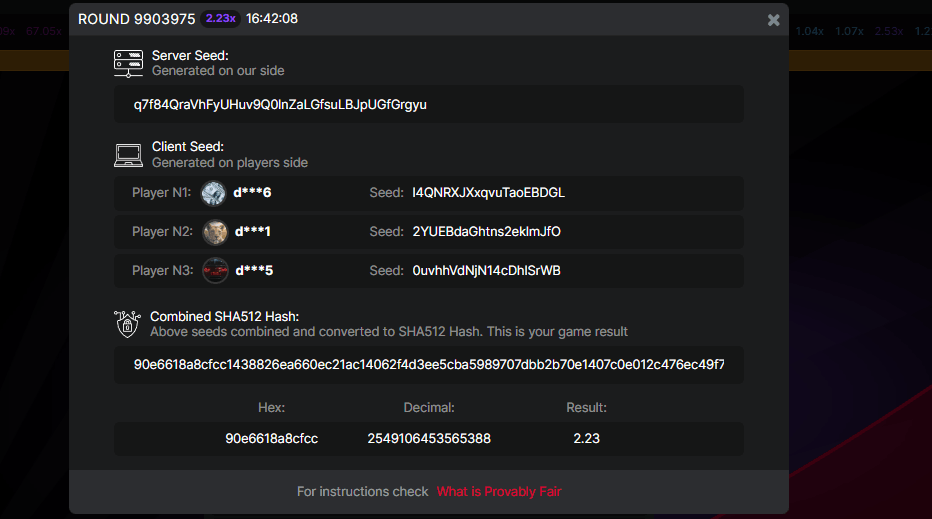
To give you a concrete example of how you can verify the results of a game, I’ll use Aviator by Spribe. The process is the same in most games, and this is what happens:
- The casino shows the hashed seed served before the round starts. It has a server seed before each round, and the result is hidden behind a hash. Players can see the hash, so the casino can’t secretly change the seed later. At this point, the multiplier from the round is locked in.
- You contribute a seed by placing a bet. This is called a client seed, and it’s usually automatic. However, you can change it manually if you want to. Then this seed is automatically combined with the server seed and the seeds of other players.
- The game automatically calculates the round result (the crash multiplier). Once the seeds are merged, the game uses a hashing function to produce the crash point, for example, 2.17x.
- When the round ends, you can click on Previous Rounds or History, where you can see the original server seed that was hashed before the round, and with the hash, the revealed seed, and your own seed, you can verify that the multiplier you saw was genuine.
Tip: You can run the numbers through an external automatic verifier to confirm that everything matches, and if the seeds and the hashed values match, it’s proof that the casino didn’t tamper with the result.
Types of Provably Fair Games
Provably fair games have come a long way from the simple 2D dice games that started off the trend. The range has now expanded a lot, and today, you’ll find the provably fair technology in practically all instant-win and crypto games, especially at casinos that support cryptocurrencies.
Below are some of the most common categories of provably fair games you’ll find at most Australian casinos:
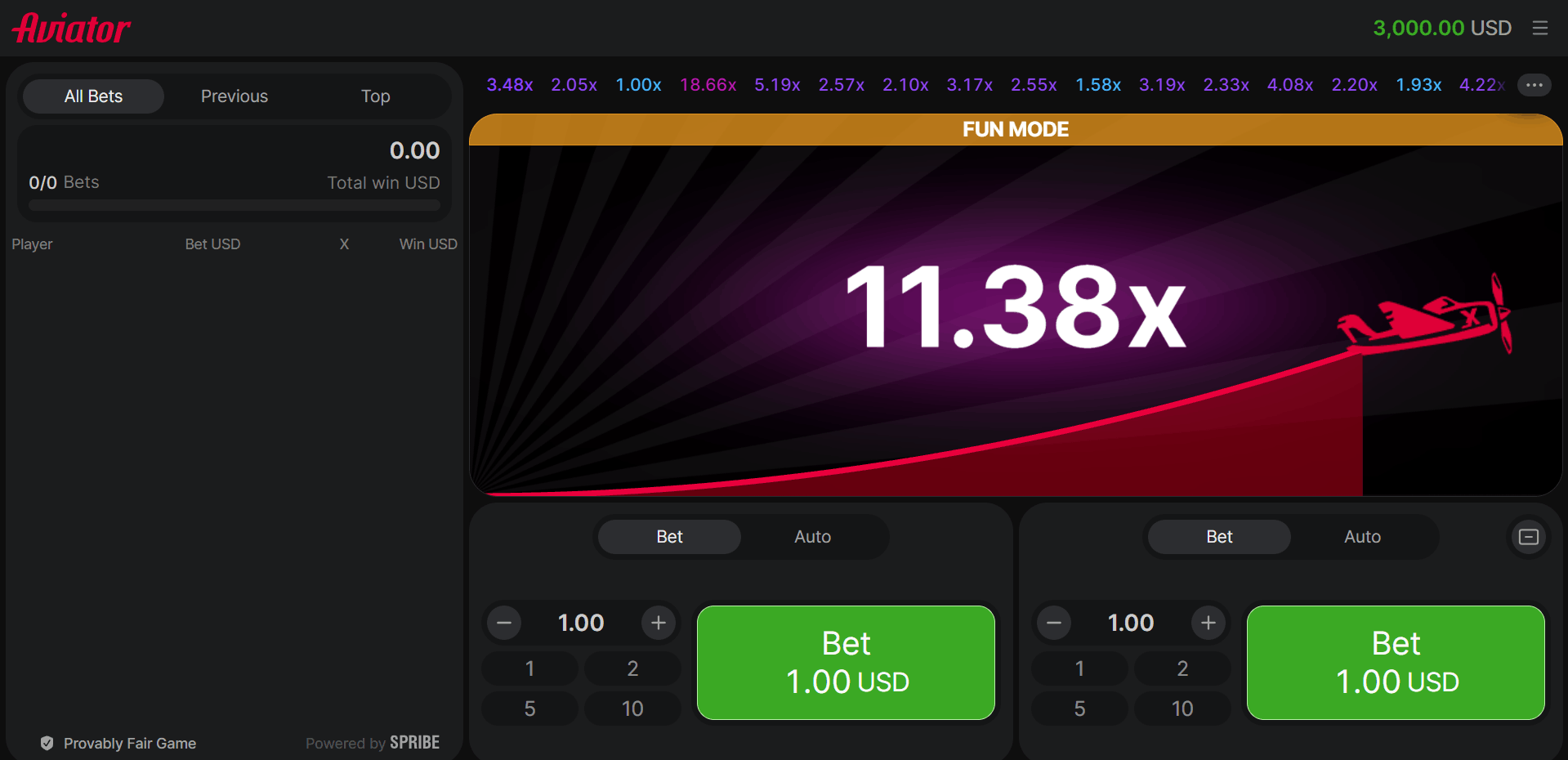
Crash games were one of the first mainstream crypto casino game formats to adopt the provably fair technology. The concept of the game is very catchy: there’s an object (like an aeroplane or a rocket) that keeps climbing, and the multiplier climbs with it.
The goal is to ‘cash out’ before you ‘crash out’, because the aeroplane will eventually crash, and you lose your bet. So, for example, if you were to bet A$10 and you wait and you wait until the multiplier reaches 10x, you will win A$100. However, that rarely happens because most of the time, the plane will crash before the 10x mark.
Now, how does provably fair work here? Well, in these games, after the round ends, you can check if the aeroplane was ‘supposed’ to crash at that point, meaning that the crash point was genuine and wasn’t manipulated.
These are some of the most popular provably fair crash games you can try:
- Aviator by Spribe
- Crash by BGaming
- Crash Chicken by InOut
- Speed Crash by Hacksaw
- Crash Puck by TaDa Gaming
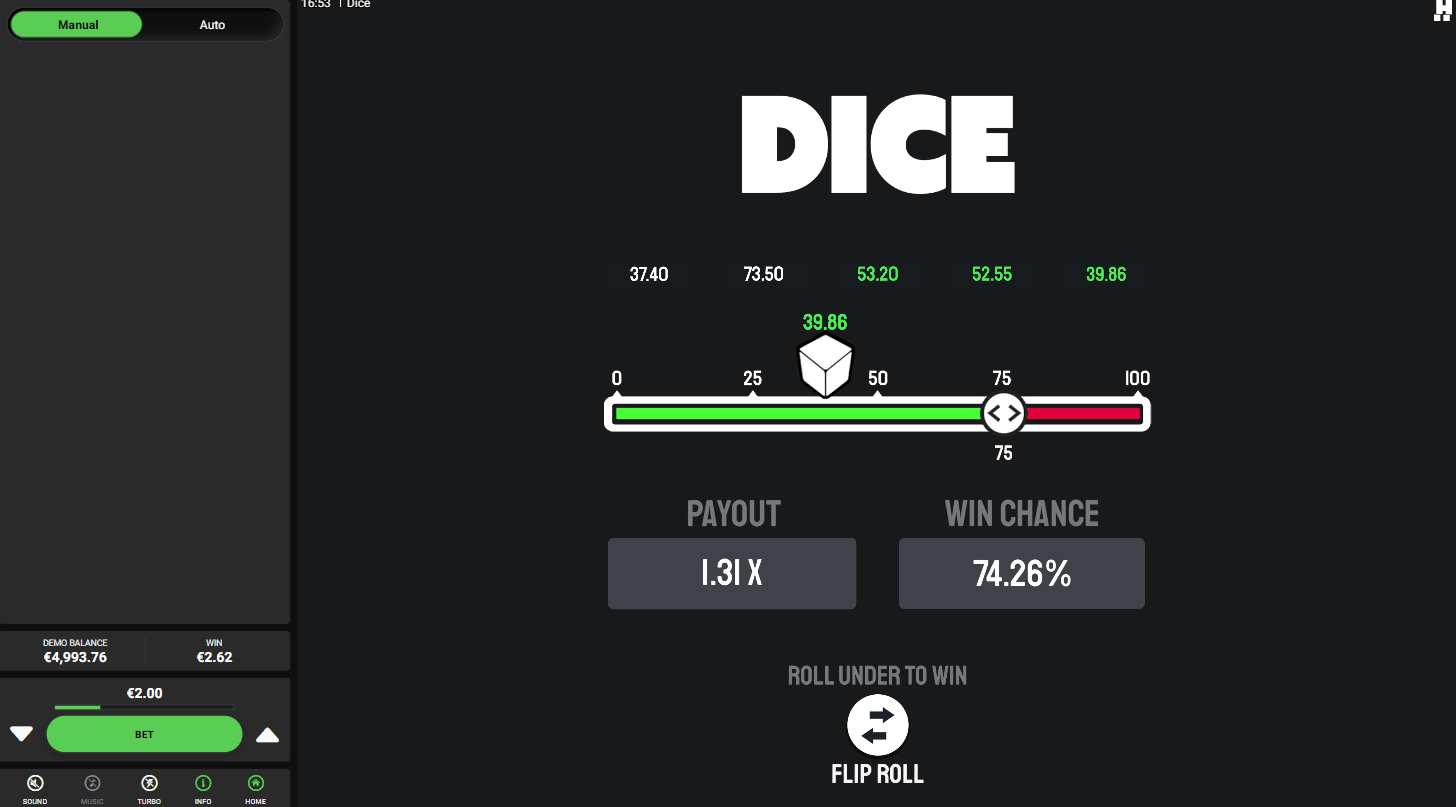
Provably fair actually originated with dice, which makes sense because dice are just numbers and the easiest to verify. The server seed and player seed generate the final roll, usually between 0.00 and 99.99, and you can check it after the round.
There are many different Dice variants, like the popular 7/11 variant, or the even simpler Hacksaw variant, where the dice can roll from 0.00 to 9.9,9 and you need to be in the green part.
Popular variants include:
- Dice by Spribe
- Hi/Lo Dice by Spribe
- Dice by BGaming
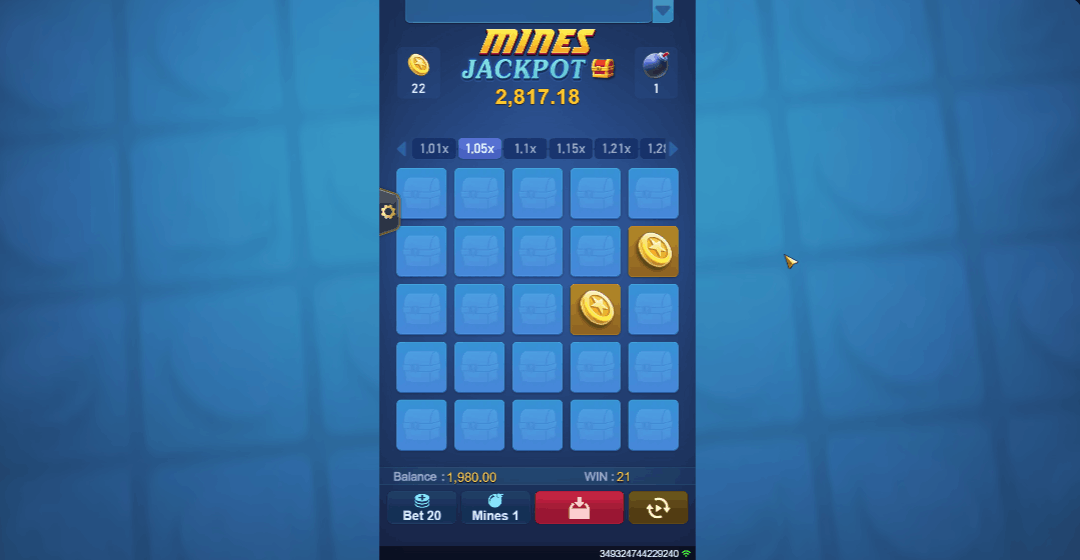
Mines is another popular instant-win game that often has provably fair verification because the result of each tile is determined by the seeds.
The casino locks in its server seed (hashed) before each round, and when you start picking tiles, the game uses those seeds plus a number to decide where the bombs are placed – so the bombs are placed on the grid before you even start picking.
After the round ends, you can check whether the bomb positions were changed during the round. Some of the most popular variants include:
- Mines by BC Original
- Jackpot Mines by TaDa Gaming
- Mines by Spribe
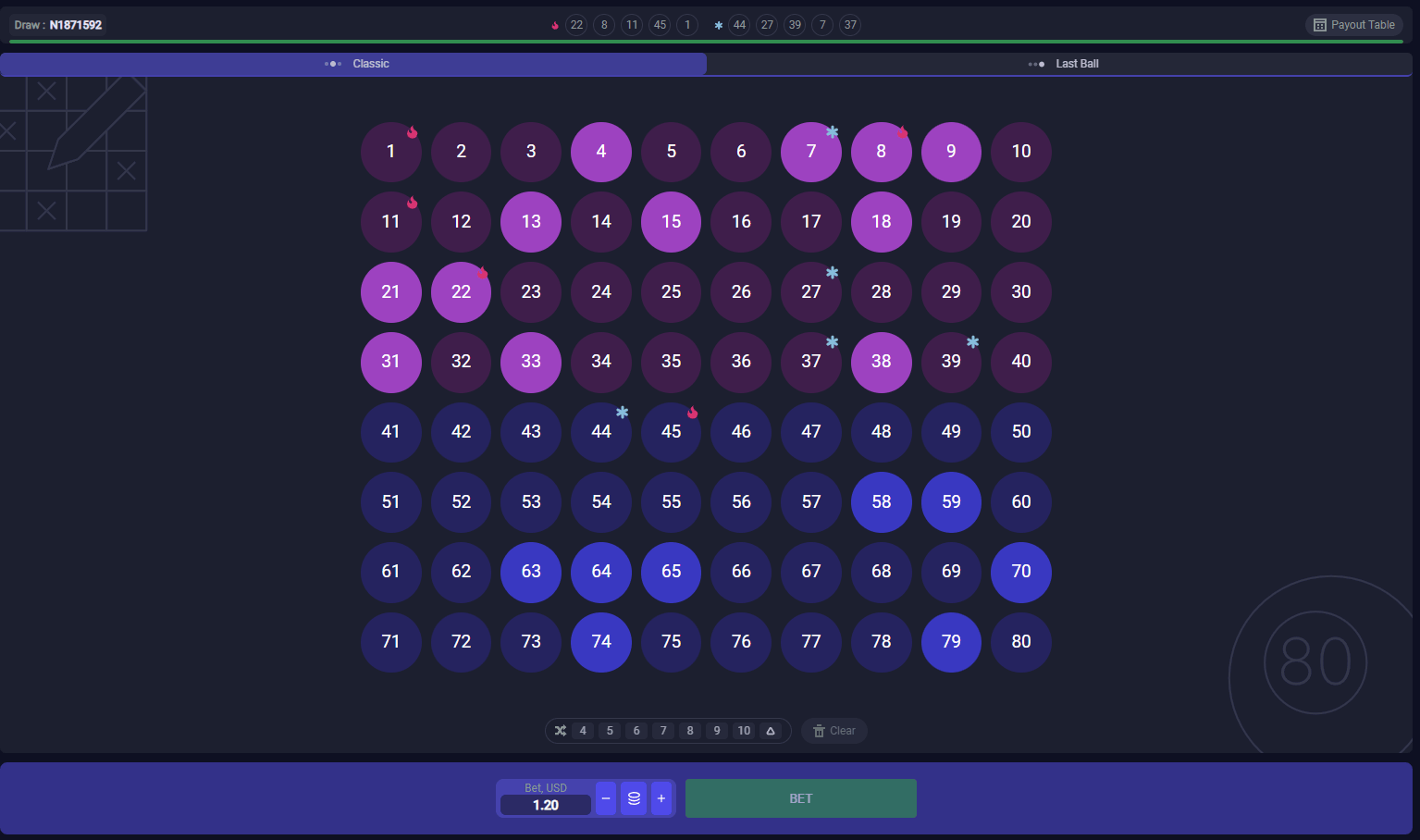
Keno is one of the oldest number games in gambling, and it was “ripe” to get the provably fair treatment. You pick your numbers and place a bet, and once the round starts, the game draws a fixed number of winning numbers.
With provably fair Keno, you can click on History or the verification icon to check if the winning numbers were generated correctly. This game works very well with provably fair because the result is just numbers, and numbers are easy to verify through a hash calculator.
Some popular provably fair Keno variants include:
- Keno by BC Originals
- Keno Deluxe by Tada Gaming
- High-Low Keno by SmartSoft Gaming
- Keno 80 by Spribe
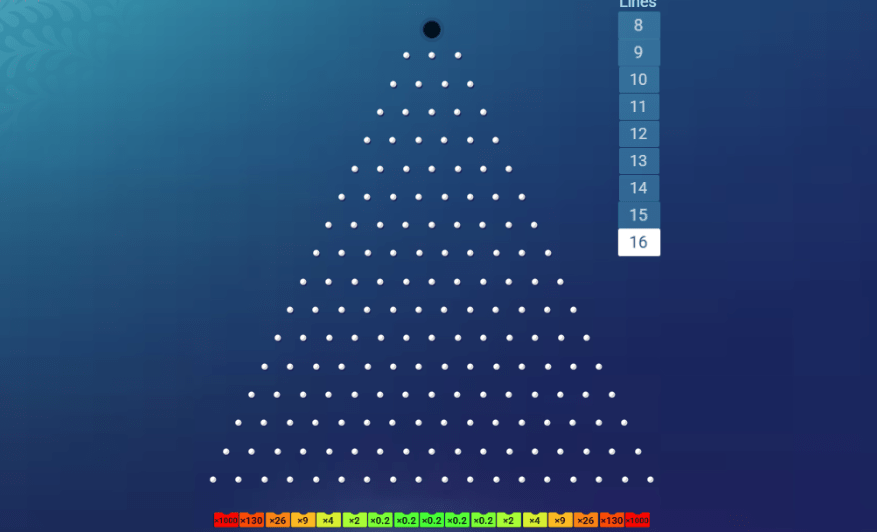
The good old Plinko is experiencing a renaissance at Australian casinos, and most of the Plinko variants now are provably fair.
This is another simple instant-win game where all you need to do is click to drop the ball from the top of the pyramid, and it will bounce its way down the pegboard and land in one of the slots at the bottom. Your payout is your bet multiplier by the multiplier in the slot the puck landed in.
Some of the most popular provably fair Plinko games include:
- Plinko by BGaming
- PlingoBall by EvoPlay
- Plinko Blitz by Dragon Gaming
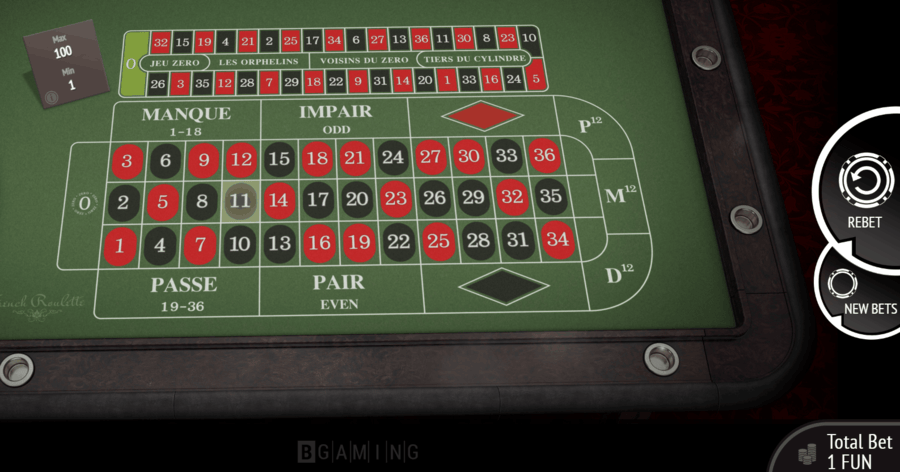
Table games are a mixed bag when it comes to provably fair. Live dealer roulette, blackjack, and baccarat do not use provably fair technology because you’re watching a real wheel or a real dealer on camera, so you don’t need verification. Also, they’re regulated by independent testing agencies and are licensed by strict licensing bodies, so that’s how you know that the outcomes of each round are fair.
However, crypto casinos have introduced several RNG provably fair versions of popular table games like blackjack, baccarat, and roulette, which use seeds to verify the result. Some examples include:
- French Roulette by BGaming
- Provably Fair Blackjack by BC Originals
- Provably Fair Baccarat by Spribe
Note from Australian Gamblers: You probably noticed that I didn’t mention provably fair pokies. That’s because traditional online pokies (like the ones from Pragmatic Play, BGaming, or Novomatic) don’t use provably fair technology, as they rely on regulated RNGs and independent testing agencies to confirm their fairness, and this has been the case for over a quarter of a century now.
Provably Fair vs RNG Games: How Do They Compare?
Traditional online casino games run on RNGs (random number generators) that have been tested and certified by external bodies. You don’t get to see how the result was generated, but you need to trust the testing agencies and regulatory bodies behind it. This system has worked for years, especially for pokies, blackjack, roulette, and other casino games, and it’s still the standard at most Australian casinos, both online and land-based.
The big misconception is that provably fair games replace the RNG. That’s not true. The outcome in provably fair games is still generated by software using an algorithm, the same way RNG games do.
The distinction is that provably fair games let you verify how that outcome was produced by checking the server seed, your client seed, and the hash after the round ends. With traditional RNG games, you have to take the result as-is and rely on the regulator or testing agency to confirm that the game isn’t rigged.
Summary: Should You Play Provably Fair Games?
Provably fair games didn’t reinvent online gambling, but they did add a touch of transparency. Yes, you can (and should) rely on regulatory bodies and testing labs to confirm that a game is fair and completely random, but being able to check and verify the results yourself is even better.
The biggest misconception is that provably fair games are ‘more rewarding’ or ‘pay out more’. No. The RTP and house edge are the same in provably fair games as with any other casino game, which means that the house still has a slight edge. It just removes the doubt that you lost because the game was rigged.
The provably fair technology has become the default in most instant-win games like Crash, Dice, Mines, Keno, and similar, so most Australian online casinos now don’t even have a dedicated section for provably fair games. It’s just there if you want it, and that’s the point – to be able to check the result of the round and verify that you were just unlucky.
FAQ
The technology itself isn’t illegal, and most Australian casinos now feature provably fair games. You can try any instant-win game like Mines or Crash; chances are, it uses provably fair technology, so you can verify the outcome.
No. The house edge is still the same as in any other casino result, and while you can verify the result of the round, you can’t change the odds.
Not necessarily. Most casinos now accept both crypto and fiat currencies, and you can play provably fair games with any currency that’s accepted at the site.
No. Online pokies use regulated RNGs and testing agencies, and they don’t use seed verification. This means that there are no provably fair pokies.
Latest Articles


Disclaimer: Gambling in Australia is strictly for individuals aged 18+. Our editorial team adheres to a strict policy to ensure that our reviews, recommendations, and content remain objective and free from external influence. We strongly encourage responsible gambling at all times. If you or someone you know is struggling with gambling addiction, visit the following gambling resources:
- https://responsiblewagering.com.au/
- https://www.gamblinghelponline.org.au/
- https://gamblershelp.com.au/get-help/