



Why Blackjack Isn’t Just One Game
When I first started playing blackjack, I assumed every table followed the same rules. 21 is 21, right? Well, admittedly, there weren’t as many blackjack variants back then as there are now, and blackjack has evolved massively over the years. Let’s start with a brief blackjack history lesson before I go on to explain the blackjack differences.
Blackjack didn’t really begin as a single fixed game. It grew out of older European card games, and casinos slowly shaped it into the version we know today. Historians say it originated in France in the 1700s from a Baccarat variant called Chemin de Fer, but as the years went on, the game of 21 spread to different countries, each with slightly different rules. The two main variations were European Blackjack and Pontoon.
Then the casinos themselves started adjusting things. Small changes like when the dealer checks for blackjack, whether you can double after a split, or how many decks are used might sound minor, but they directly affect the RTP and winning chances. Yes, two seemingly similar blackjack tables can have different RTPs.
Side bets pushed things even further. There are now countless bets like Perfect Pairs, 21+3, and many, many more that change how the game feels and pays out.
Fun Fact from Australian Gamblers: Even the name blackjack comes from an old promotional payout where a player holding the ace of spades and a black jack received a special bonus that paid 10 to 1. That version disappeared long ago, but the name stuck.
Most Popular Blackjack Variants
Over the years, blackjack has split into several variants that fall into a few groups. Some are classic rule variations like American or European blackjack, while others are played with a different deck, like Spanish 21 or Pontoon. To add to that, live casino studios have been getting very creative with blackjack variants in recent years, so don’t be surprised to see blackjack with multipliers, bonuses, or even mini games inside the game.
Below, I’ll go through the most common blackjack variants you’ll see in online casinos and give my own expert view on each.
Before you continue, if you’re unfamiliar with the basic blackjack rules and you don’t know where to start, my beginner’s guide on blackjack will help you.
Classic Blackjack
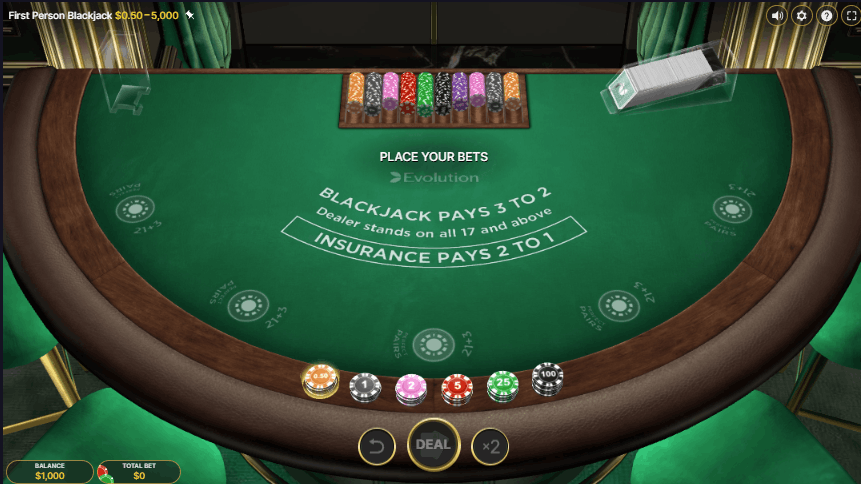
When we think of blackjack, we usually think of the classic blackjack variant. Now, the ‘classic’ may be a bit different depending on where you live or what options are available to you, but the ‘classic blackjack’ down here is the standard game with payouts of 3:2 for a natural blackjack and the dealer hitting on soft 17.
Now, before I continue, I must point out that there’s an ongoing debate over the ‘dealer hitting on soft 17’ and even some classic blackjack variants have the dealer standing on soft 17, so there’s no standardised rulebook that says “Oh, this is a classic blackjack variant, the dealer must hit on soft 17”.
Even if a game is considered to be a classic blackjack variant, the rules may be slightly different, so read the rulebook before playing.
Since there isn’t one universal version, I’ll give you my own definition of what I consider standard blackjack. For me, Classic Blackjack is a six-deck game where the goal is to beat the dealer by reaching 21 without going over. You can split pairs, double down on your first two cards, and the dealer stands on soft 17. The blackjack payout should always be 3:2.
With these rules in place, classic blackjack sits at roughly ~99.5% RTP when you’re playing basic strategy correctly.
Note from Mike Waters: A big misconception among blackjack players is that if the dealer hits on soft 17, the player has higher chances of winning. In reality, it’s the opposite. Hitting on soft 17 actually increases the house edge ever so slightly, so the best blackjack version you can play is a variant where the dealer stands on soft 17.
American Blackjack
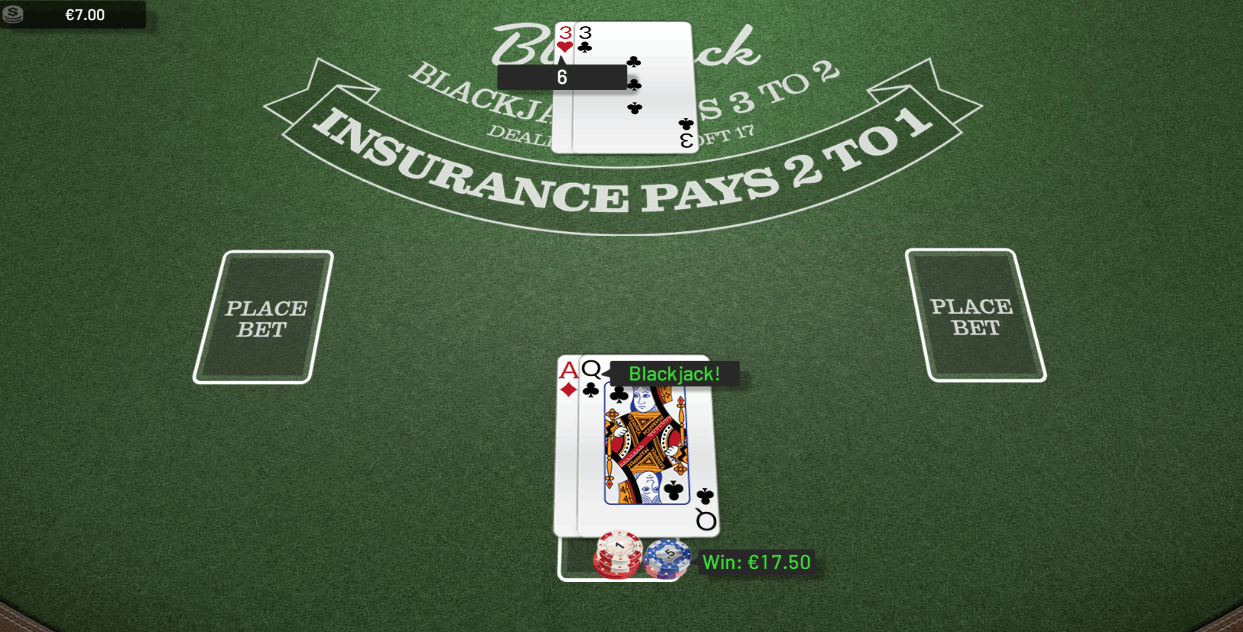
American blackjack is very close to what most players would call classic blackjack, which is why people often mix the two up. The core rules are the same, and the only major difference is in how the dealer receives their cards.
In American blackjack, the dealer gets two cards right away: one face up and one hole card. If the dealer shows an ace or a ten-value card, they immediately check for blackjack before players continue.
This is good for players because it protects them from making extra bets (like doubling or splitting) only to lose instantly against a dealer’s natural.
I’ll be repetitive here, but I must point out that the rules vary a lot depending on the casino. During my last Las Vegas visit, I was disappointed to see that all of the casinos have now switched to 6:5 payouts on blackjack instead of the classic 3:2, which increases the house edge by a massive 2%. In other words, don’t trust a game just because it’s advertised as American blackjack, but read the table rules before playing.
European Blackjack
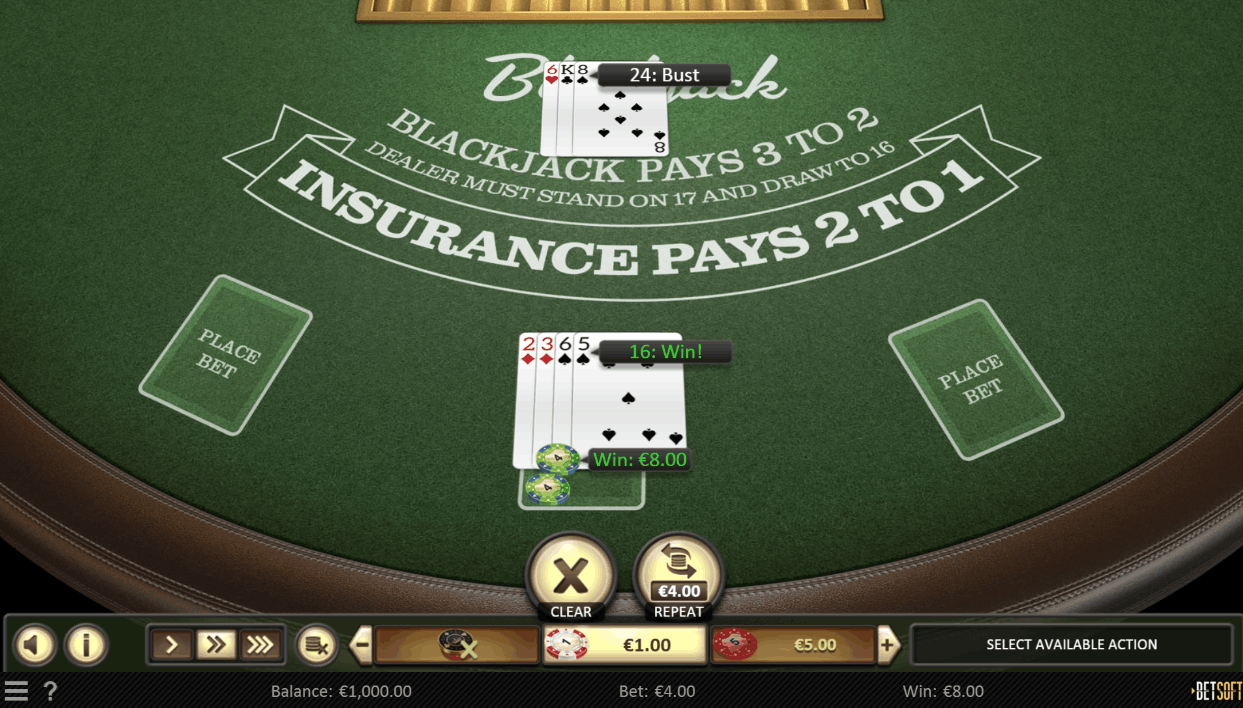
European blackjack is another variant of Classic blackjack and looks almost identical to American blackjack, with one key difference. The dealer here only receives one card at the start, and the second card isn’t dealt until all players on the table finish their hands.
This changes the risk slightly because you’re at risk of the dealer hitting a natural after you split or double down.
In European blackjack, the dealer also typically stands on all 17, soft or hard, and you can only double on 9, 10, and 11. Due to these rules, the house edge is slightly lower, at around ~0.70%. But as I mentioned, the rules vary depending on the particular table, so a classic European Blackjack might offer a better RTP than American blackjack, depending on the blackjack payout, number of decks used, etc.
Pontoon
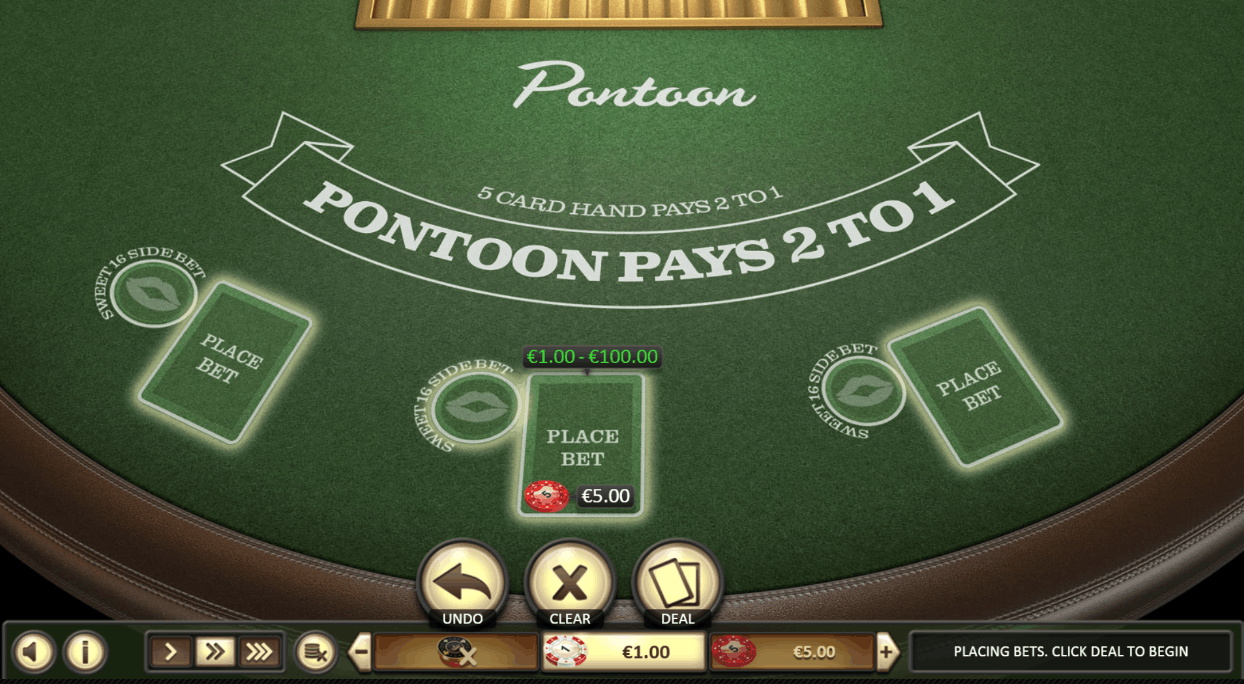
Although Pontoon is considered a blackjack variant, it’s actually the other way around. Both games come from the old European game Vingt-Un (Twenty-One), which spread across Europe in the 1700s, and in Britain, the game became known as Pontoon. Funny enough, the name was derived from soldiers who mispronounced the French name.
That’s why we still hear the name Pontoon in the UK and Australia too, but today’s Pontoon at Australian casinos is actually closer to the Malaysian version that developed later, while the British Pontoon game is closer to the original game.
The main difference from the classic blackjack version is that the dealer gets both cards face down, while players get their cards face up. So, you decide whether to stand, hit, split, or double before you even know the dealer’s hand. I’d say that Pontoon is much harder to play (especially for beginners) because you need to think a few steps ahead.
There are so many ‘ifs’ and ‘buts’ that I don’t think the game is worth playing unless you’re very experienced. The RTP is very close to standard blackjack, but it’s harder to execute a good strategy, so stick to classic blackjack.
Australian & Malaysian Pontoon
Australian Pontoon, also called Malaysian Pontoon, is a regional variation that’s popular in Australian casinos and parts of Asia. It’s more similar to Spanish 21 or European blackjack than the British Pontoon, but it borrows some of the British terminology.
For example, a 21 is called a Pontoon and pays extra (usually 3:2). However, the game is usually played with Spanish-style decks that have the 10s removed, and the dealer has no hole card, which means that you don’t know if the dealer has a natural until the end of the round (same as European blackjack).
The dealer always hits on soft 17, and with the added rules, this Pontoon variant feels faster and more aggressive.
Each Australian casino has its own rules, so I suggest you read the rulebook before playing. For example, Burswood Casino in Perth allows splitting up Aces, while others don’t. Or, Adelaide Casino only allows doubling down on two-card hands, while all other casinos allow you to double down on any hand.
Spanish 21
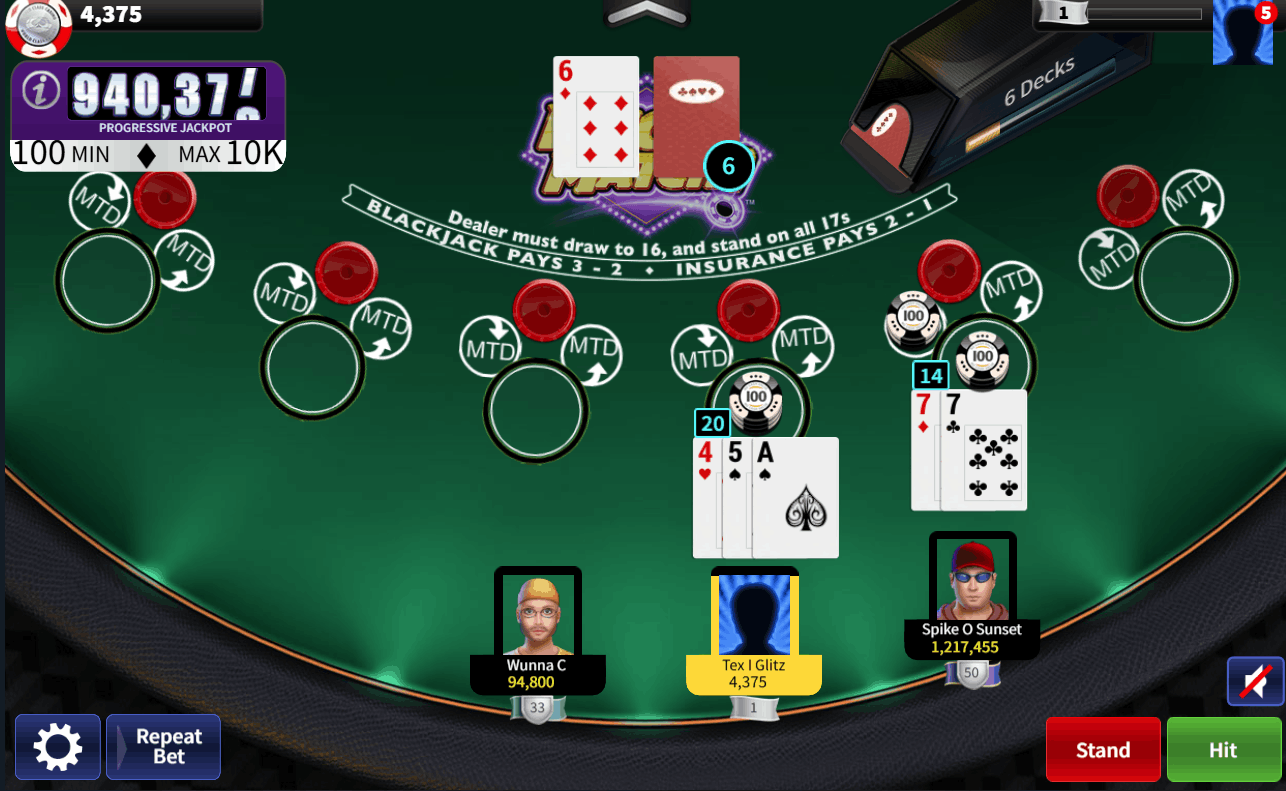
Spanish 21 is one of the most interesting blackjack variants and my personal favourite (that is, when I manage to find a Spanish 21 table with standard rules) because it looks very similar to standard blackjack, but plays very differently. The biggest difference here is that all 10 cards are removed from the deck. Yes, I know what you’re thinking, and yes, this does increase the house edge to classic blackjack.
To compensate for this, the game adds other rules. For example, a player 21 always beats a dealer 21, and you can usually double down more freely. There are also bonus payouts for certain hands that don’t exist in standard blackjack. Another rule is that you can double down after splitting any hand, which is not the case in any other blackjack variant.
The bonus payouts are usually for 21. For example, a 6-card 21 pays out 2:1, while a 7+ card 21 pays out 3:1. Then, there are special bonuses for specific hand combinations, like 6-7-8 or 7-7-7 that pay out up to 5:1. Also, in Spanish 21, the dealer always stands on 17.
With all of these rules in place, the RTP can reach over 99.60%, which is higher than even the Classic blackjack variant.
Blackjack Switch
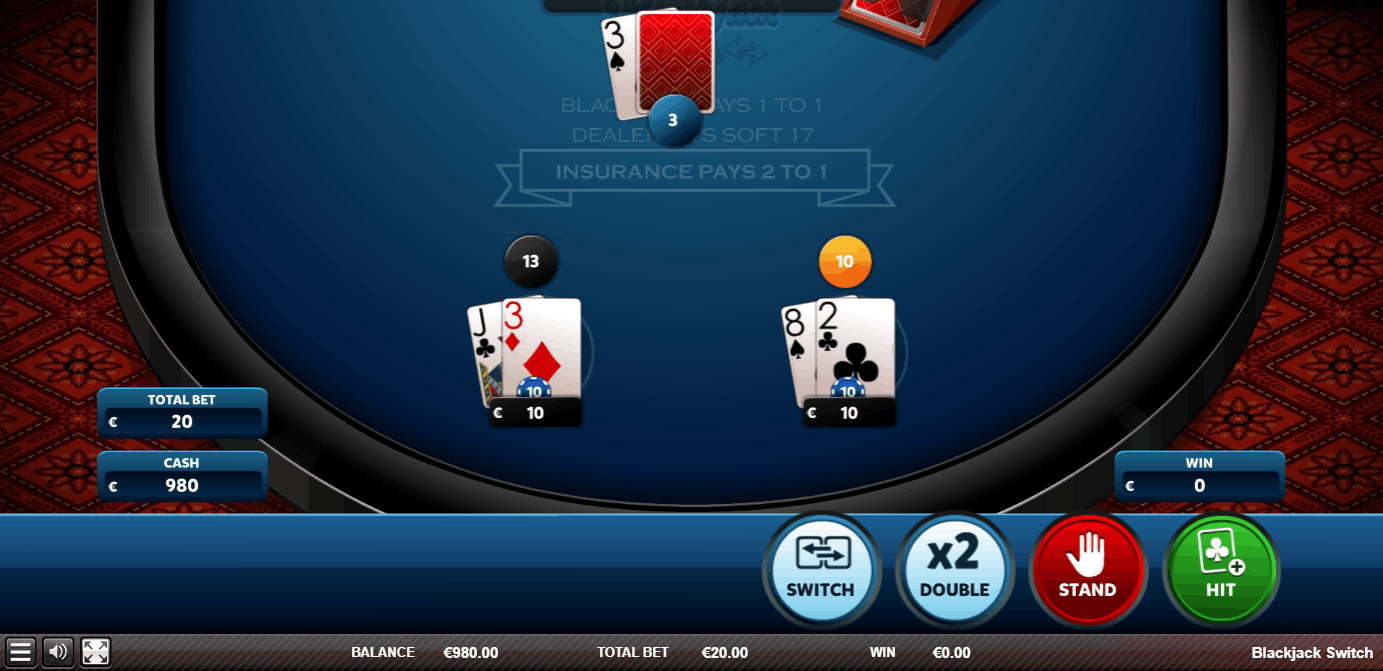
While all the different types of blackjack games I explained so far were more or less ‘standard’, Blackjack Switch definitely isn’t. You get two hands in each round, and you can swap cards between them. If it sounds crazy, trust me, it is.
Here’s how it works: you place two equal bets, and you’re dealt two separate hands. After the deal, you can switch the second card between the hands. So if you’re dealt something like 16 and 11, you might switch to create a strong 20 and a weaker hand instead.
Obviously, this is a major advantage for the players; to balance it out, casinos have a few ‘punishments’, like:
- Dealer 22 is not a bust – Instead, if the dealer has 22, it becomes a push against all player hands except a natural blackjack.
- Blackjack pays 1:1 – Unfortunately, a natural blackjack pays 1:1 instead of 3:2.
- Dealer hits on soft 17
The other rules, like deck number, splitting, and doubling, are similar to classic blackjack, so no differences there. Interestingly, with all these changes, the RTP is again around 99.5%. The strategy is a bit different here, and you have to be very careful not to make beginner mistakes when switching cards, but if you play with the perfect strategy, the RTP is the same as with Classic Blackjack.
Multihand Blackjack
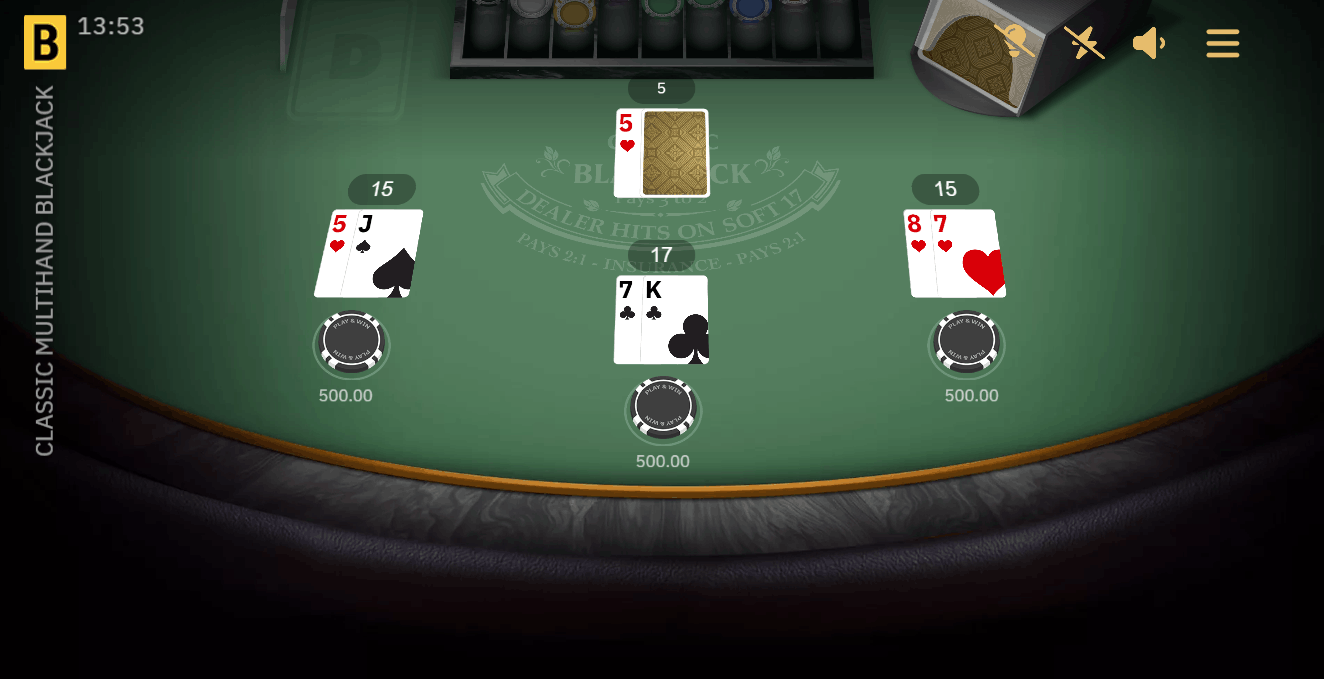
Multi-Hand Blackjack is exactly what the name says: you play several blackjack hands at the same time, against the same dealer. Now, this is different from Switch Blackjack because you cannot change cards between your hands. You’re just playing with more hands at a time. The rules are usually identical to some of the classic blackjack variants (most of the time they follow the American blackjack rules), so the only difference here is the speed
Since you go through multiple hands at once, the pace is much faster, which means that wins and losses occur more often, too. This increases the game’s volatility, and I don’t recommend it unless you absolutely know what you’re doing. Everything happens rather fast, so you need to really, really be on top of your game.
Multiplier Blackjack

Multiplier blackjack is a broader term that describes blackjack games with multipliers. This is a relatively new concept that first appeared in online casinos in the late 2010s, usually in live casino games. The idea is to add variety to blackjack, and the best-known example is Lightning Blackjack by Evolution, but I’ve seen several similar versions from other studios as well.
The rules are largely the same as the classic game, but before each round starts, random hands are selected to receive multipliers. So, if you win with one of those hands, you get a multiplied payout of up to 25x.
The change here is that you pay a fee per bet to fund the multipliers. The fee is actually 100% of your bet’s value, so it works more like a side bet. So, if your bet is A$1, you pay a fee of A$1, so your total wager is A$2.
Different hand values have different multipliers, with blackjack having the highest. Then, if your hand wins, you’ll be paid out the standard 1:1 (or 3:2 if you win with a blackjack), and you’ll get a payout based on the assigned multiplier from the previous hand.
While this sounds a bit complicated, it’s actually rather simple. Your multiplier is carried over to the next hand, so if you get a, say, 5x multiplier for winning with a score of 18, and you win with a score of 18 the next hand, your bet will be multiplied 5x. To win a multiplier, you essentially need two consecutive hands to win.
The downside of this and every other multiplier blackjack variant is that the RTP is much lower than the standard game. In Lightning Blackjack, the RTP is closer to 86%, which is terrible for a blackjack game.
Other popular multiplier blackjack variants, like Quantum Blackjack by Playtech, have slightly more favourable odds, but I suggest everyone stick to the more classic variants if you’re looking for a game with good odds of winning. If you’re after high payouts and jackpots, you’re probably better off playing other casino games like pokies, roulette, or even crash games.
RNG vs Live Casino Blackjack
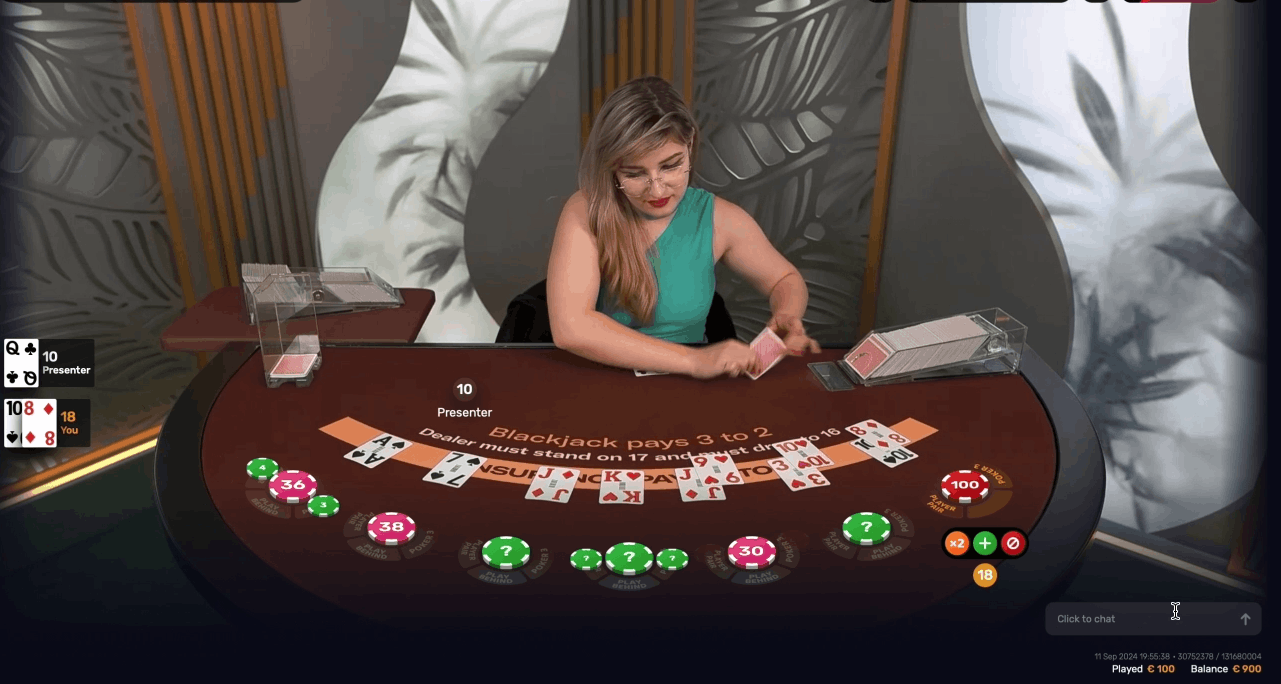
RNG blackjack and live casino blackjack are both played online, but the experience is very different. I’ve spent a lot of time playing both, and there’s no clear winner for me. Which one is better depends on what you want from the game. If you care about speed and pure strategy practice, RNG blackjack usually wins. If you want the social side and the real casino feeling, live blackjack is the better option.
The biggest difference is how the outcomes in the game are generated. RNG online blackjack uses a random number generator (RNG), which means that computer software produces the results. In turn, the game looks like a video game, and you control the pace. RNG blackjack games are also often available in demo for free, so they’re perfect if you want to learn the basic strategy.
Live casino blackjack, on the other hand, uses a real dealer and real cards streamed from a studio, so the game moves at a natural table speed. You’re playing exactly like you would if you were sitting in a casino, so it does look more natural if you’re used to that setting, but you have to keep up with the dealer and other players, which can make the game more stressful if you’re still learning.
Here’s a comparison table where I lay out the main differences between the two:
| Feature | Online (RNG) Blackjack | Live Casino Blackjack |
|---|---|---|
| Accessibility | Available 24/7 | Some tables have schedules or limited seats |
| Interaction | You play alone against software | Real dealer and other players at the table |
| Pace | No waiting, you control the pace | Slower, similar to land-based casinos |
| Variety | A huge number of variants with different rules | Good selection, but fewer total options |
| Atmosphere | Fully digital | Closest thing to a real casino experience |
| Strategy & Practice | Excellent for learning and testing strategies, available in demo | Harder to practise due to the pace and unavailability in demo mode |
| Bet Limits | Often lower minimum bets | Usually higher minimums at live tables |
Tip from Mike Waters: Neither variant is better than the other. It’s all up to you and your preference. Top blackjack online casinos have their games tested by independent testing bodies, so you don’t have to worry about rigging the RNG or anything like that. If you’re a true beginner, I suggest you start with classic RNG blackjack and work your way from there.
Blackjack Rules That Affect RTP the Most
One thing I’ve learned after thousands of hands is that the name of the blackjack variant matters less than the rulebook. The game can be called “Classic Blackjack” and still has a very different RTP just because of a few rule changes, so you should always, with no exception, read the rulebook before you start playing.
Here are the main things I always check before sitting down at a table:
- Number of Decks: The number of decks directly affects the RTP. Fewer decks are generally better for the player because there are more high-value cards left in circulation, and it’s better for card counting (although deck penetration matters more for card counting than sheer number of decks). Single or double-deck games usually offer slightly better odds than six or eight-deck versions, assuming the rest of the rules stay the same.
- Blackjack Payout: This is the biggest differentiating rule. A good blackjack table should always pay 3:2. If the table pays 6:5, the house edge increases significantly, and no other “good” rule can really fix that. Personally, I try to avoid 6:5 tables completely, and this rule is the primary reason why I prefer online blackjack versus playing in land-based casinos.
- Dealer Hits or Stands on Soft 17: If the dealer hits on soft 17, the house edge goes up slightly. If the dealer stands on soft 17, the RTP improves for the player.
- Doubling Rules: The more freedom you have to double down, the better. Good tables allow doubling on any two cards and sometimes after splitting. Restrictions here reduce your ability to maximise strong hands.
- Splitting Rules: Again, the more options, the better. Being able to resplit pairs, especially aces, is a player-friendly rule. Some tables limit splitting or don’t allow drawing cards after splitting aces, which increases the house edge.
- Surrender Option: Surrender lets you give up a bad hand and lose only half your bet. Besides being available, it’s also important to know when you can surrender. When used correctly, it can lower the house edge even further.
Most Common Types of Blackjack Side Bets
Side bets are everywhere nowadays. Almost every blackjack table adds some extra betting options, but as exciting as they look, most side bets are terrible in terms of RTP.
The reason is simple. Side bets are designed to increase volatility and the house edge. You might hit a nice payout once in a while, but long-term, they’re always worse than just playing the main blackjack hand. My tip would be to avoid them altogether.
Here are the most common ones you’ll see:
- Perfect Pairs: This bet pays if your first two cards form a pair. The theoretical RTP for this side bet is around 95.82%, which is lower than the standard game.
- 21+3: This combines your two cards with the dealer’s upcard to create poker-style hands like straights, flushes, or three of a kind. Its RTP is somewhere around 88%.
- Insurance: The insurance bet is an addition that’s offered when the dealer shows an ace. You’re basically betting that the dealer has blackjack. Although it sounds good, it’s mathematically a bad bet unless you’re counting cards.
- Lucky Lucky and Lucky Ladies: These side bets pay based on your first two cards, and you need a total score of 20 (or 19 or 21, depending on the bet). The RTP is usually around 90%.
- Bust It/Dealer Bust Bets: With this side bet, you’re betting that the dealer will bust, sometimes with bonuses depending on how many cards the dealer uses. Again, the RTP is usually around 90%.
Final Thoughts: Which Blackjack Variant Should You Play?
After all these years playing blackjack, I’ve realised that there isn’t one “best” blackjack variant. The type of a blackjack game matters less than the specific rules of a specific table. Generally speaking, Spanish 21 has the best RTP, followed by Classic and American blackjack, but one seemingly minor rule change (like 6:5 instead of 3:2 blackjack payout) can make any blackjack game worse.
The biggest takeaway from this guide is not to focus on the type of blackjack game, but always read the rules first. Learn the basic strategy and look for details like dealer behaviour on soft 17, blackjack payout, deck count, splitting, and doubling options. These rules matter more than whether the game is labelled ‘American’, ‘European’, or anything else.
Avoid the traps like Multiplier Blackjack or side bets as much as possible, stick to the tested rules, and play with the proper strategy. This is how blackjack stays one of the best casino games you can play.
Latest Articles


Disclaimer: Gambling in Australia is strictly for individuals aged 18+. Our editorial team adheres to a strict policy to ensure that our reviews, recommendations, and content remain objective and free from external influence. We strongly encourage responsible gambling at all times. If you or someone you know is struggling with gambling addiction, visit the following gambling resources:
- https://responsiblewagering.com.au/
- https://www.gamblinghelponline.org.au/
- https://gamblershelp.com.au/get-help/