



Valerie Stronghold is a Casino Content Writer at Australian Gamblers, based on the Gold Coast, Australia. With over seven years of experience writing about online casinos, she specialises in turning complex casino features, bonuses, and terms into clear, player-friendly content....
Read Full Bio
Matthew is a seasoned content editor with over a decade of experience working with some of the biggest names in sports betting and casinos, including the likes of Yahoo Sports as a freelance writer and a croupier at a local...
Read Full BioKYC Verification Explained
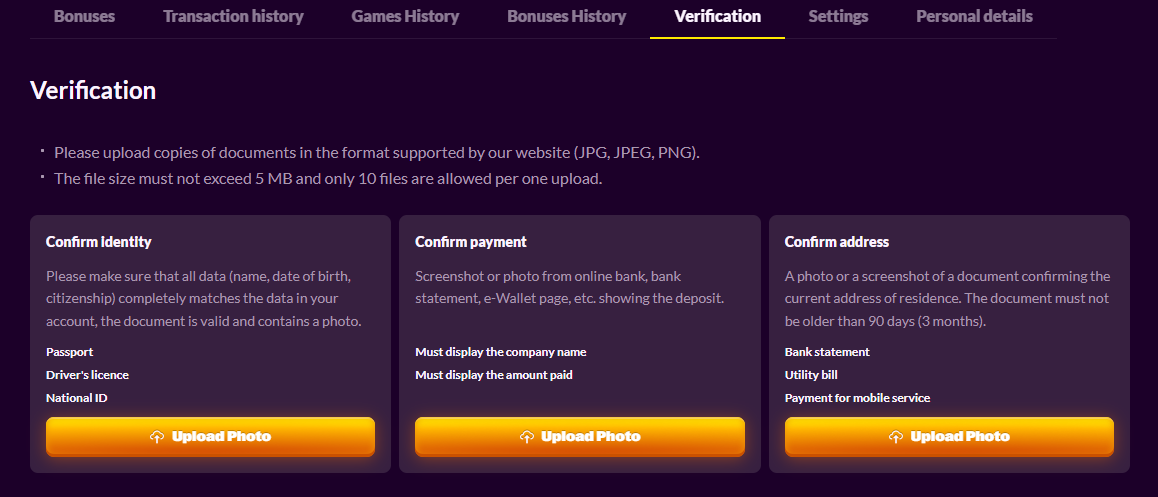
KYC is an acronym for Know Your Customer, and it is the identity check that safe online casinos perform on their registered players. To put it as simply as possible, casinos run KYC account checks in order to make sure you are a real person and of legal age.
Performing KYC checks is imposed by the casino’s licence issuer or regulator. For example, online casinos licensed by the Curaçao Gaming Control Board or Anjouan Gaming must complete a full KYC check for anyone who wants to get paid out on their officially licensed sites, and they must also follow anti-money laundering (AML) rules to keep those licences.
Starting with the why, there are four main reasons why online casino sites require identity verification:
- To confirm you are at least 18 years old
- To confirm that the account belongs to a real person, and that they only hold one account on the site
- To confirm that you don’t use any stolen cards for depositing and you don’t operate an account that doesn’t belong to you
- To prove to their regulators that they know who is moving money through their site (AML requirements)
As for when KYC verification happens, this varies from one casino to another. Some casinos ask you to verify your identity during registration, while others let you deposit and play first and request documents later. A withdrawal is one of the most common points at which KYC comes into play, particularly if you haven’t completed verification earlier.
Casinos may also ask for additional documents if something changes or needs clarification, such as a large withdrawal, unusual account activity or a mismatch between your personal and payment details. So, even if you’ve already passed an initial KYC check, you may occasionally be asked to provide further information.
Advice from Australian Gamblers: Strive to complete KYC within the first week of playing at a new online casino, long before you request a payout. That way, you won’t have to wait too long after a win and can withdraw right away. However, if a casino never asks for KYC verification, that’s a red flag, not a perk.
How long KYC verification will take depends on the casino and how it handles these checks. Some online casinos use automated checks, which are much faster than manual checks at other casinos, which often take a few days.
Automated checks can take minutes, while manual checks usually require between 24 and 72 hours. Also, if there are extra checks like source of funds, where users need to send other payment confirmations or bank statements, it can take up to a week or longer.
My experience shows that most casinos get back to you with results in around 24 hours, provided everything you uploaded is in order.
Note from Valerie: Keep in mind that approval is only half the wait. Once you are verified, the casino starts processing your withdrawal, which depends on their internal payout processing time and your chosen payout method.
Paperwork Requested by Casinos
The documents you need to upload to pass KYC account verification are usually universal across online casinos. Most commonly, casinos ask for proof of identity, proof of address, and proof of payment, but some sites may require extra documents like a photo of you or proof of where your money comes from.
Of course, requirements can vary slightly from one casino to another, but if you have the following documents ready, you won’t be caught off guard during the KYC process.
Proof of Identity
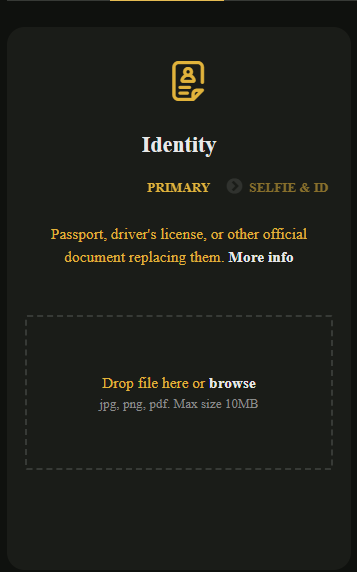
A document serving as proof of identity is something every online casino asks for. This can be a scanned photo of your passport, driver’s licence, or national ID card – any of these will do.
When uploading proof of identity, make sure the document is still valid because an expired document is actually one of the most common reasons for KYC delays and rejections. Also, the photo should be clear, with all four corners of the document in the frame, and nothing blurred or covered.
If you choose to send an ID, attach a scan of both the front and back. The same goes for a driver’s licence, while for a passport, the photo page is enough.
Proof of Address
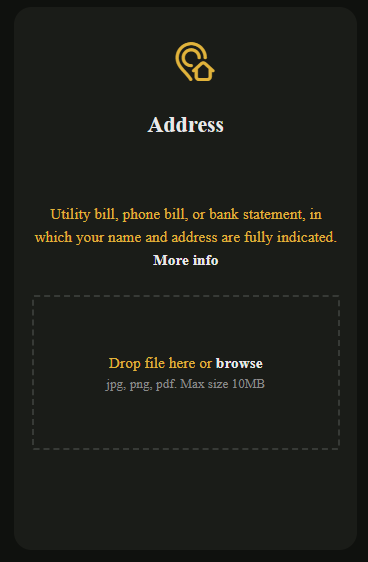
Next, the casino wants to confirm that you live where you say you do, meaning the address you provided during registration is your own. For this, they require a photo of a recent utility bill, bank statement, telephone bill, or official letter from a government body stating your address.
Also, the ‘recent’ part typically means issued within the last three months, but some online casinos also accept documents issued within the last 3 to 6 months. Always confirm this with the casino you play at, as it can also cause verification delays.
Remember that the name and address on the document need to match the name and address on your account exactly. If you’ve recently moved or your bills aren’t in your name, update your account first, because these mismatches can lead to document rejection.
Proof of Payment
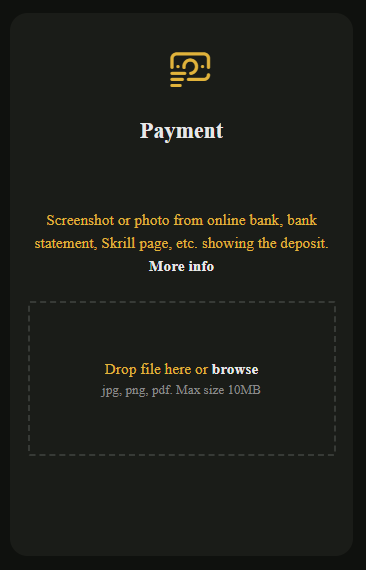
Proof of payment helps the casino confirm that the card, wallet, or bank account you used is really yours. What you send and how many photos you attach depends on the method you used.
For example, if you used a Visa card, you’ll be asked to attach a photo showing your name and expiration date, with the middle digits covered so that only the first six and last four are visible. You should also cover the CVV and submit a photo of the actual card, not a screenshot.
Users who prefer e-wallets like MiFinity can take a screenshot of their logged-in account showing their full name and the email or account ID. Also, keep in mind that the email should match the one you provided during registration.
For bank transfers, a recent bank statement showing your name and account details is standard. Crypto casinos usually ask for the wallet address and sometimes a screenshot of your wallet or crypto exchange account. Remember that you only need this for the method you’ve used, so if you stick to one method, you’ll need to deal with it once.
Other Documents
I’ve also come across casino sites that require additional documents or proof besides the three above. For example, a casino might ask for a selfie, either on its own or of you holding your ID, as a further step to ensure that the documents belong to you.
Other casinos require a short video call, but this is more common with larger withdrawals or accounts deemed unusual. Also, if your documents aren’t in English, the casino team might require an official translation and, in rare cases, a notarised copy.
Source of Funds Verification
Before I explain source of funds (SOF) verification, note that this isn’t part of the standard KYC procedure that casinos regularly require before withdrawing.
So, Source of Funds answers one question for casinos: where did the money you gambled come from? This is about a specific deposit or withdrawal, while source of wealth (SOW) is the bigger picture, related to how you acquired such an amount of money over time.
When verifying SOF, casinos usually ask for recent payslips, employment or income records, or bank statements, while for SOW, they look at tax returns and other official documents confirming inheritance or a property sale.
Such checks usually come up during enhanced ‘due diligence’, which is a deeper review the casino starts when something requires more detail and explanation. This could be a large deposit or a big win, and the casino requests this because it needs to explain to its regulator where the money came from before it pays you out.
How to Complete KYC Account Verification at Online Casinos
The account verification process is similar from one casino to the next, and once you’ve done it once, you know the drill. It takes about 10 minutes to collect and upload paperwork once you know what to expect.
What may differ is the layout and wording. Some casinos ask for all documents at once, while others request one at a time. The steps below are the most common way to complete KYC at online casinos, but if your chosen casino does things differently, follow its specific instructions.
1
Open the Verification Tab
Log in to your account and look for a section that says Verification, KYC, or Documents. Most online casinos place this under your Account or Profile, but some sites email you specific instructions and require you to upload documentation and send it via email.
If you can’t find this section or you haven’t received an email, it’s best to contact support and ask for details.
2
Check What You Need to Submit
Before uploading anything, read through the requirements under each section. The casino specifies which documents are needed and which are accepted, say, under Identity proof.
At this point, recheck your account details to make sure you have provided the correct personal data, like your full name, date of birth, and address, without any typos. These should match, down to the last letter, with the information written in the personal documents you are going to upload.
3
Prepare Your Documents
Collect all the documents you need and start taking photos. Photos should be well lit, with the documents laid out on a flat surface and all four corners visible in the frame. Always use the original document, not a photocopy, and make sure nothing is blurred out or missing.
Most casinos accept various photo formats, like JPG, PNG or PDF files, but they also specify the size limit, so check that too. Large iPhone photos sometimes fail to upload, so make sure you are following every instruction.
Reminder from Valerie: If you are taking a photo of your card, cover the CVV digits and the middle digits. This is best done by slightly editing the photo after you take it.
4
Upload Under the Specific Sections
Upload and submit all documents under their corresponding sections, such as your ID photo under Identity, and so on. Don’t do this over multiple days, because you may unintentionally delay the whole process, as the casino will need to review every document each time you submit it.
In my experience, submitting all documents at once gets you verified faster. Also, remember that some casinos require a selfie holding your ID card, so upload one if it’s requested.
5
Wait for Verification
After you upload everything, the verification status usually changes to Pending or Under Review. Check your email, including your spam folder, because that’s how most of the online casinos notify you when they approve your documents or request something else.
If the team asks for a new document upload, read what exactly went wrong with the first and what documents are missing, and upload another one as soon as possible. If you haven’t heard from the casino’s team within the given KYC verification timeframe, contact support and ask whether anything is missing.
Common Reasons Why Casinos Reject Documents
When a casino rejects your KYC documents, there is usually a specific reason behind it. In many cases, it’s something simple that could have been avoided, such as an unclear photo, an expired document or information that doesn’t match your account.
From my experience, the following are the most common reasons why online casinos reject documents and slow down the KYC verification process, and these also appear over and over again in player complaints and online gambling forums:
- Information mismatch: Even if a few letters don’t match what you’ve inserted at signup and what is shown on the document, it can be reason enough for rejection. The name must match exactly, including a middle name if it’s written on the official document. The same goes for the address provided.
- Invalid proof of address: Most casinos accept documents from the last three months only, and if your document is older than that, it can be deemed invalid. A bill that is a week over the limit can still be refused, so pay attention to this.
- Bill in someone else’s name: A utility bill in your partner’s or parent’s name won’t work and can still be grounds for rejection, even if you live at the same address.
- Unsuitable document: You can use your driver’s licence as proof of identity, but you can’t use it as proof of address. Phone bills are sometimes accepted and sometimes refused, depending on the casino, but lease agreements are usually refused because they don’t prove that you live there.
- Expired identity document: Even if all the info matches and the photo is OK, an expired ID, driver’s licence, or passport is automatically rejected.
- Poor image quality: The photos should be taken in good light, preferably daylight, without any blur or glare over the text.
- Wrong card digits covered: Some players mistakenly cover the last four digits of their card number, which can also lead to rejection because, without those numbers, the casino can’t match the card to their deposits.
Tip from Australian Gamblers: If you are doing everything as requested and uploading clear, correct, and decent documents, but still get rejected every time, the problem may not be you or your paperwork. That’s a good time to check the casino’s licence and our guide to finding safe casinos, in case it turns out the casino is unreliable or unregulated.
KYC Tips: How to Get Verified Fast
You already know you should upload clear, legible photos, so I won’t include that among my tips to speed up verification. Instead, here are some genuinely useful tips for Aussies that save the most time:
- Check your account details and information first: If your address or name has changed in the meantime, update it in your profile before you upload anything in order to avoid the common mismatch.
- Confirm eligible documents with support: In case the casino doesn’t clearly indicate which documents are accepted for proof of identity and address, ask support to clarify this. Also, save the reply because it helps if you get rejected later on.
- Go with the safest document options: If you know that uploading an ID and a recent utility bill works best, upload those. Avoid choosing documents that fall in the ‘accepted at some casinos’ category, as often as you can.
- Download a PDF bank statement directly: Instead of a photo of a bank slip, upload PDF files downloaded directly from your bank app because they include all the relevant details and are more credible. If the casino doesn’t accept PDFs, ask what they’d prefer instead.
- Use one payment method for both deposits and withdrawals: If the method you’ve chosen is accepted for both deposits and withdrawals, it’s best to use it for all your transactions.
- Start KYC verification on time, preferably while your balance is still low: If you win, you won’t want to deal with this while your money is waiting, and you’ll also avoid the withdrawal delays that come from last-minute document requests.
- Submit documents during the casino’s working hours: Some casinos process verification documents around the clock, while others don’t do it on weekends or Sundays. To avoid your documents sitting in the queue, send documents during regular working hours.
Final Notes on KYC
KYC verification is a normal and necessary step at licensed online casinos, and it’s usually requested before your first withdrawal on the site. It’s there to confirm your age, identity, and that the money that you use is yours.
Most delays and problems come from small mistakes like a name mismatch or an outdated utility bill rather than casinos purposely making things hard, so don’t view it as something annoying you’d rather skip.
Instead, think of it as a security and AML step that has to be done. Have your documents ready, make sure the information matches what’s on your Account, and upload on time. If you do it right, KYC is just a quick pit stop on your way to a successful, painless withdrawal of your real money winnings.
Latest Articles


Disclaimer: Gambling in Australia is strictly for individuals aged 18+. Our editorial team adheres to a strict policy to ensure that our reviews, recommendations, and content remain objective and free from external influence. We strongly encourage responsible gambling at all times. If you or someone you know is struggling with gambling addiction, visit the following gambling resources:
- https://responsiblewagering.com.au/
- https://www.gamblinghelponline.org.au/
- https://gamblershelp.com.au/get-help/